
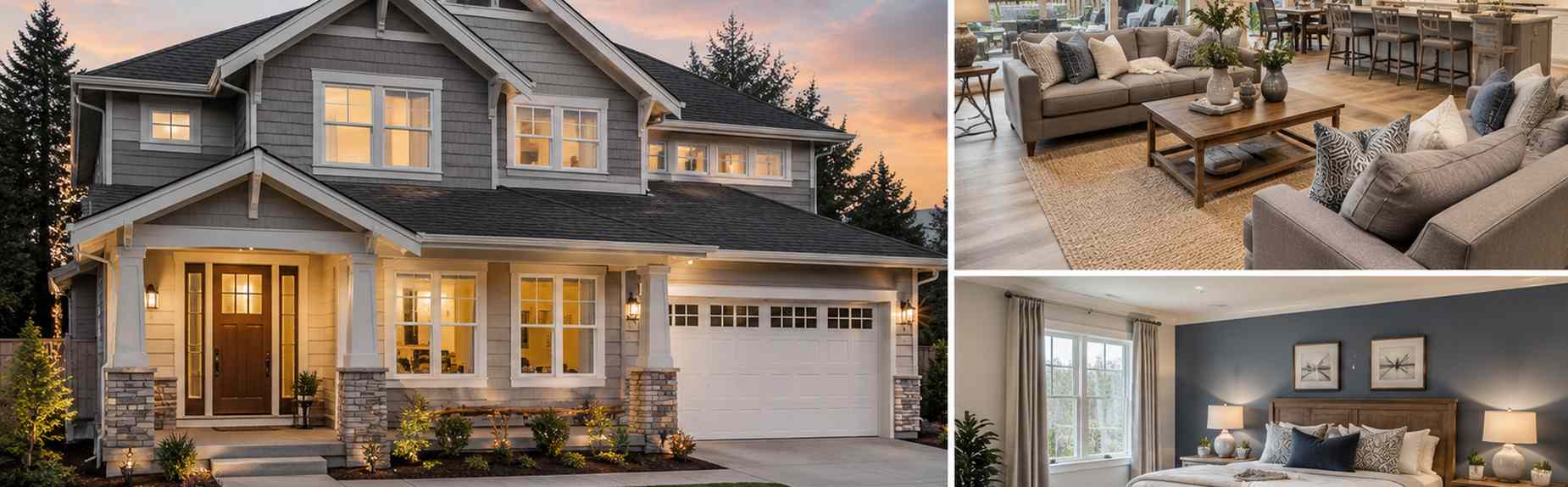

Creating a beautiful home isn’t about decorating one room perfectly—it’s about making everything flow together. If you want to coordinate areas for a cohesive home look, the secret lies in connecting key zones so they feel intentional rather than disjointed.
By focusing on a few high-impact areas and tying them together with consistent design choices, you can transform a collection of separate rooms into a unified, polished space. Here’s how to coordinate three central areas.
Cohesive Home Design: Key Takeaways
- A consistent color palette is the easiest way to tie multiple rooms together for a cohesive look.
- Coordinating your living room, kitchen, and entryway creates flow in the spaces people see and use most.
- Repeating materials, textures, and accents throughout the home reinforces a unified design story.
Start With a Unified Color Palette
The foundation of any cohesive home look is a thoughtful color palette. When the same family of colors appears throughout your home, the eye naturally connects one space to the next.
You don’t have to paint every wall the same shade. Instead, choose a core palette of two or three main colors plus a couple of accent tones. Use them in different proportions from room to room.
Neutral base colors are especially versatile because they provide a calm backdrop that lets accents shine.
Area One: Coordinate Your Living Room
The living room is often the heart of the home and a natural place to anchor your design. Because it’s where families gather and guests spend time, getting this space right sets the tone for everything around it.
Start by selecting key pieces—such as a sofa, rug, and main lighting—that reflect your chosen palette and style. From there, layer in textiles and decor that echo colors found elsewhere in the home.
Pay attention to how the living room connects visually to adjoining spaces.
Area Two: Tie In Your Kitchen
The kitchen is the second area worth coordinating carefully, especially in modern open-concept homes where it’s visible from other living spaces.
To tie the kitchen in, echo colors and materials from nearby areas. Cabinet hardware, bar stools, and accent pieces offer easy opportunities to repeat tones and finishes.
Even small touches matter. Coordinating accessories and lighting fixtures with your overall palette ensures the kitchen feels deliberate.
Area Three: Don’t Forget the Entryway
The entryway is the first impression of your home, yet it’s often overlooked. Coordinating this space previews the style found throughout the rest of the house.
Choose entryway furnishings—like a console table, mirror, or rug—that reflect your home’s palette and materials. This creates an immediate sense of continuity.
Because entryways are typically compact, a few well-chosen pieces go a long way.
Repeat Materials and Textures Throughout
Beyond color, materials and textures are powerful tools for unifying a home. Repeating elements like wood tones, metal finishes, or fabric textures across rooms creates subtle connections.
For example, if you use brushed brass fixtures in one area, carrying that finish into other rooms reinforces consistency.
This layered repetition is what separates a truly cohesive interior from a series of disconnected rooms.
Bringing It All Together During a Move with Good Greek
A move is the perfect opportunity to rethink how your spaces work together. As a family-owned, full-service moving company, Good Greek Moving & Storage helps you transport your furniture and belongings with trained crews and careful packing.
With professional packing and storage options, you can take your time arranging each room exactly how you envision it.
Cohesive Home Design: Frequently Asked Questions
How do I make my whole house look cohesive?
Start with a consistent color palette and repeat it in different proportions throughout your home. Carrying materials, textures, and accent finishes from room to room also ties everything together.
Which rooms should I coordinate first?
Focus on high-traffic, high-visibility areas like the living room, kitchen, and entryway. These spaces have the biggest impact on your home’s overall flow.
Do all my rooms need to match exactly?
No—each room can have its own personality while still belonging to the whole. The goal is harmony, not identical decor.