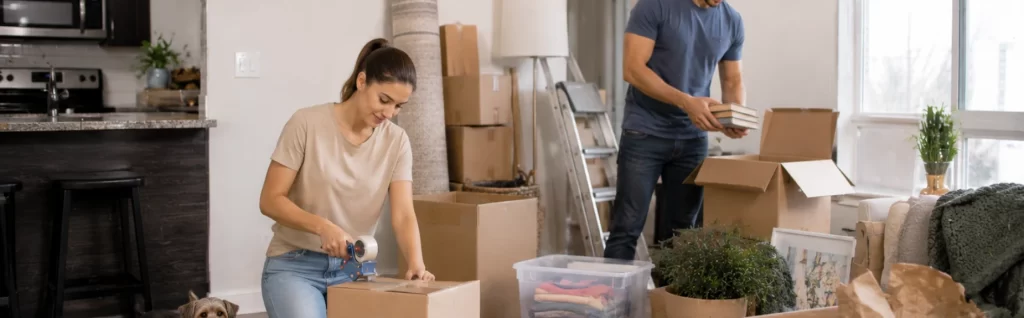
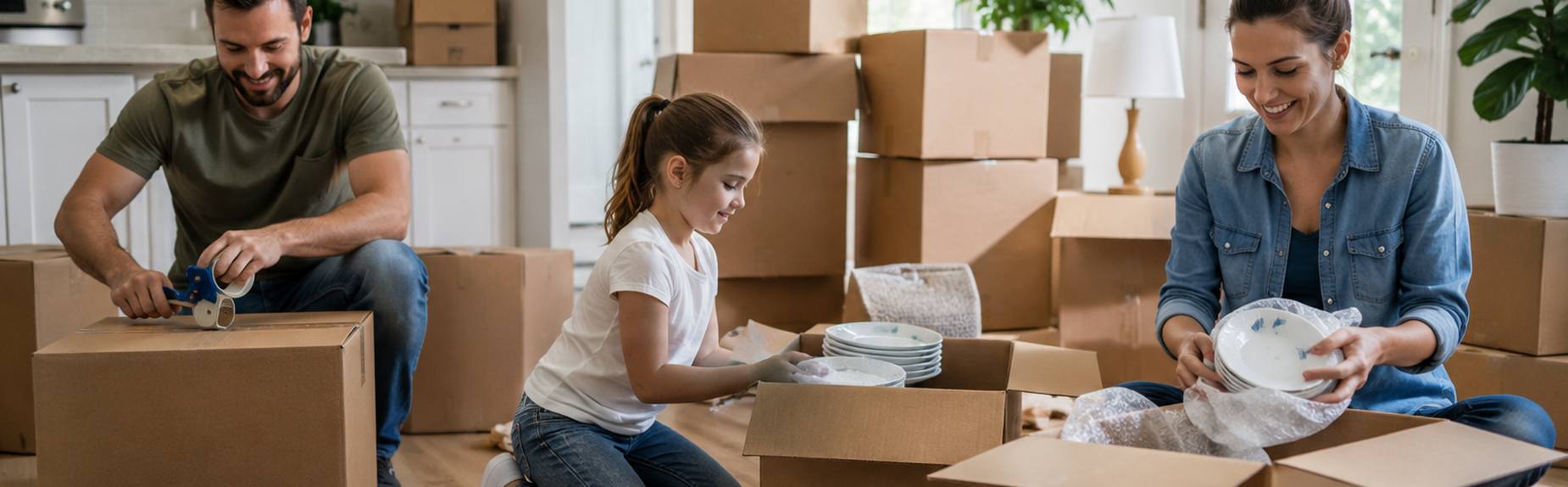

Knowing how to pack for your upcoming move is one of the most important steps in a smooth relocation. Good packing protects your belongings, saves time on moving day, and helps you settle into your new home faster.
Whether you’re moving across town or across the country, the right packing strategy turns an overwhelming task into a manageable one. Here’s a practical guide to help you pack efficiently and confidently.
How to Pack for Your Move: Key Takeaways
- Start early and pack room by room so the process stays organized and far less stressful.
- Use the right supplies and labeling system to protect your items and speed up unpacking.
- Pack heavy items in small boxes, fragile items with plenty of cushioning, and keep an essentials box for the first day.
How to Pack for Your Move by Starting Early and Decluttering
The single best thing you can do when learning how to pack for your upcoming move is to start early. Begin with rooms and items you use least, such as guest rooms, storage closets, and seasonal decor. Spreading the work over several weeks prevents last-minute panic.
Before you pack a single box, declutter. Sort your belongings into keep, donate, sell, and discard piles. Every item you let go of is one less thing to pack, transport, and unpack.
Create a simple timeline that works backward from your moving date. Assign certain rooms or categories to each week.
Choosing the Right Supplies When You Pack for Your Move
Having the proper supplies on hand makes packing dramatically easier. Gather sturdy boxes in a range of sizes, packing tape, bubble wrap or packing paper, markers, and furniture blankets. Specialty containers such as wardrobe boxes and dish-pack boxes can protect clothing and kitchenware.
Quality matters more than you might expect. Flimsy or overused boxes can collapse under weight, putting your belongings at risk.
Keep a packing kit handy as you work, including tape, scissors, markers, and labels.
How to Pack for Your Move Room by Room
Packing room by room keeps you organized and makes unpacking far simpler. Finish one space before moving to the next, and label every box with both its contents and the room it belongs to.
In the kitchen, wrap dishes individually and stack plates vertically like records, which makes them more resistant to breakage. In bedrooms, wardrobe boxes let you transfer hanging clothes directly.
For living areas, protect electronics in their original boxes when possible, and bag cords separately with labels. Take a quick photo of complex setups before unplugging.
Protecting Fragile and Heavy Items as You Pack for Your Move
Fragile items deserve extra attention. Cushion the bottom of each box with crumpled paper, wrap each delicate piece individually, and fill empty spaces so nothing shifts in transit. Mark these boxes clearly as fragile.
One of the most important rules in how to pack for your upcoming move is to put heavy items in small boxes and lighter items in large boxes. Books, canned goods, and tools can quickly make a large box too heavy to lift safely.
Distribute weight evenly and avoid overpacking. Reinforce the bottom of every box with extra tape.
How to Pack an Essentials Box for Moving Day
Set aside an essentials box that contains everything you’ll need immediately. Think toiletries, medications, phone chargers, a change of clothes, snacks, important documents, and any items for children or pets.
This box should travel with you rather than on the truck, so you’re never digging through stacks of boxes late at night.
It also helps to prepare a small toolkit and cleaning supplies for the first day.
Packing Made Easier with Good Greek Moving & Storage
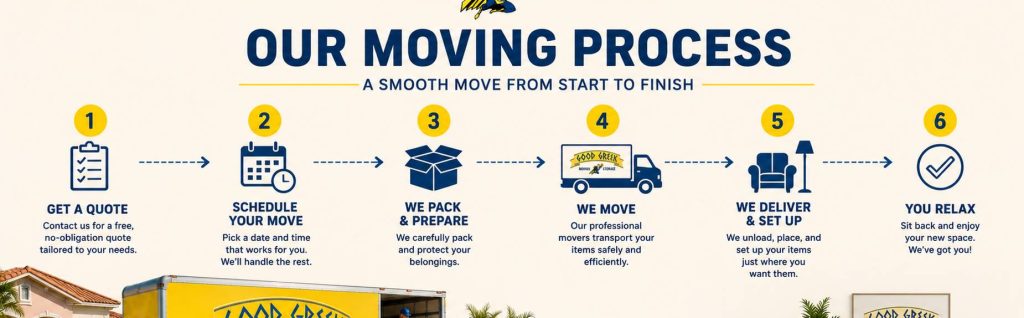
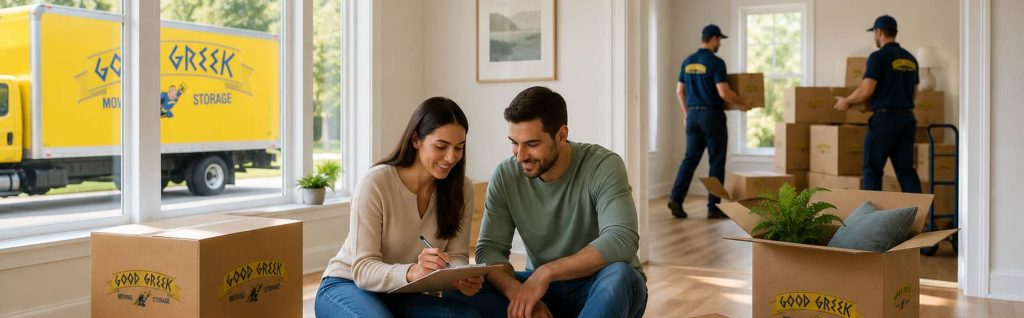
If packing feels overwhelming, you don’t have to do it alone. Good Greek Moving & Storage is a family-owned, full-service moving company offering professional packing, local and long-distance moving, storage, and auto transport. Their trained crews can handle as much or as little of the packing as you’d like.
Because Good Greek does not broker moves, its own experienced team manages your belongings from start to finish.
How to Pack for Your Move: Frequently Asked Questions
How far in advance should I start packing for a move?
For most households, starting four to six weeks before moving day works well, beginning with items you rarely use. Starting early lets you pack a little at a time and declutter thoughtfully.
What’s the best way to pack fragile items?
Wrap each fragile item individually in packing paper or bubble wrap, cushion the bottom and sides of the box, and fill all empty space so nothing shifts. Label these boxes as fragile.
Should I pack everything myself or hire professional packers?
It depends on your time, budget, and comfort level. Many people pack non-fragile items themselves and hire professionals for delicate or bulky pieces, while others prefer full-service packing for convenience.