
Spero The Good Greek explains the moving process step-by-step
Spero Georgedakis is a former North Miami Police SWAT officer turned moving industry founder. After 27+ years building Good Greek into the 2024 ATA Mover of the Year, his step-by-step playbook covers every part of a residential move.
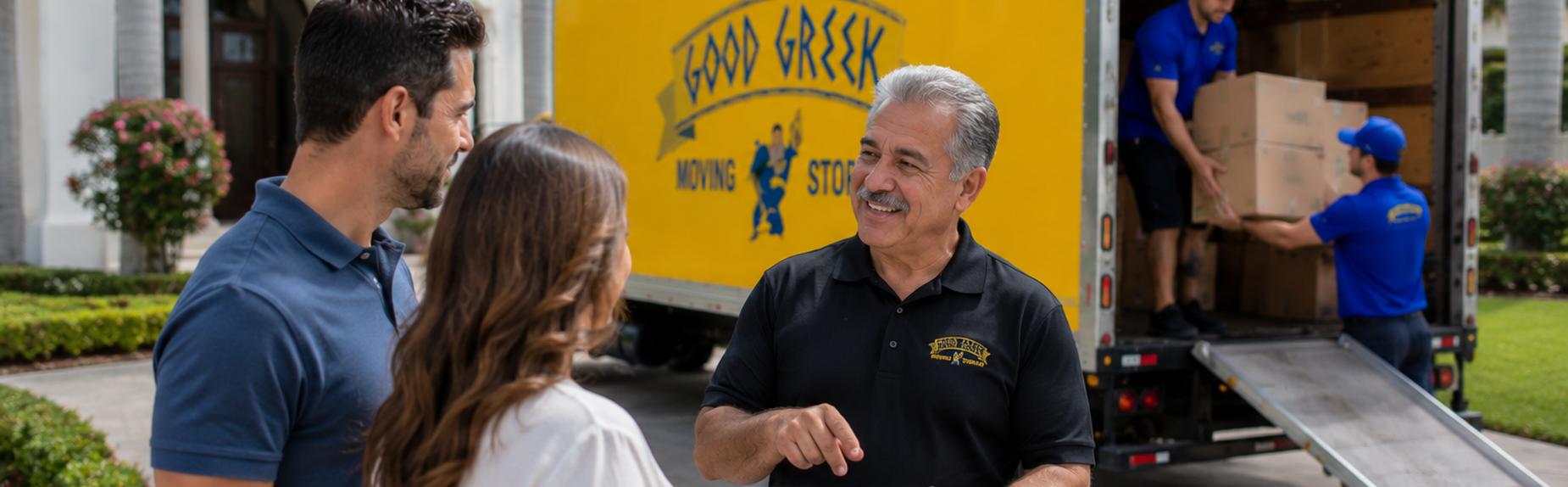
Spero Georgedakis knows moving. As the founder and owner of Good Greek Moving & Storage in South Florida, he’s had experience with every type of move involving every type of home — plus a unique background as a former North Miami Police SWAT officer before launching the company.
In a recent interview, The Good Greek outlined what people can expect when they have a typical move with Good Greek Moving & Storage. The following explanations and advice are taken from the interview — you can watch the full video above.
Moving Process: Key Takeaways
- Spero’s #1 insurance warning: don’t buy full coverage from the mover itself — movers aren’t insurance brokers. Buy third-party full replacement insurance or check your existing homeowner’s/renter’s policy first.
- Default federal coverage is 60 cents per pound per item — meant only for “nicks, dents, and scratches.” Anything you actually care about replacing needs higher coverage.
- The biggest pre-move efficiency win: purge before the movers arrive. Old magazines, attic clutter, and food on the truck for long periods all cost money. Donate food to local food banks instead.
The Good Greek moving process: 8 steps with Spero
From the movers pulling up to the truck pulling away, here’s what Spero’s interview covers, step by step.
1. How a residential move starts
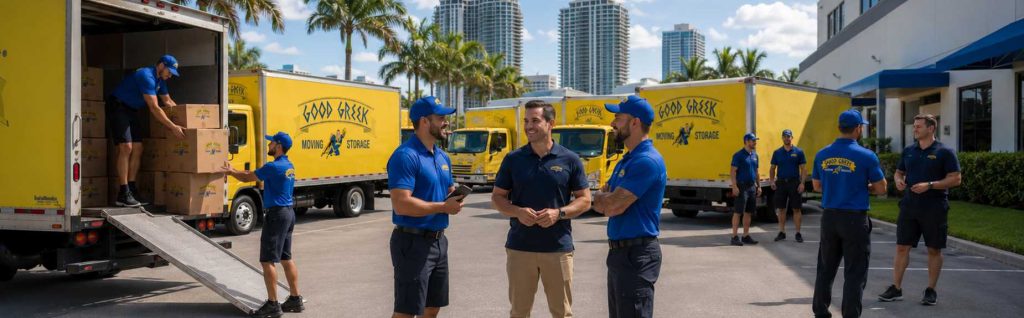
Movers pull up, park respectfully, set up floor and door jamb protection, and start wrapping furniture for transit.
A typical move with Good Greek starts off with movers pulling up to your home and parking in a safe manner — not obstructing traffic, not upsetting your neighbors. Moving day is stressful enough for you and your family; we don’t want to upset the neighbors either.
Once the movers are set up, they take protective precautions — protecting the floors and door jambs. Then the moving process starts: they wrap your furniture to protect it and do any minor disassembly (such as beds) that’s needed for transit.
2. Unloading the moving truck
At your new home: unwrap, place, set up where things belong, reassemble anything taken apart. Done.
Once the moving crew drives to your new house, they unwrap the furniture, place and set things up where they belong, and put everything back together that they took apart at the origin. The whole reassembly happens on-site.
3. Why you want full-service movers
Anything from a single item across town to a whole-house cross-country move — Good Greek handles it all under one quote.
Good Greek Moving & Storage is a full-service relocation company — which means handling anything from a one-item move across town to an entire household move across the country. The company also provides packing services and crating and uncrating — a specialty service used mostly for artwork and marble pieces. Plus secure storage space when timing gaps require it.
4. Before the move (purge + donate)
Before the truck arrives is your last chance to declutter. Old magazines, attic clutter, food that’d ride for days — all cost you money to move.
Before the movers arrive is a good time to purge any items you don’t want to move. Old magazines take up space and cost you money — toss them. The attic is a goldmine for items you can pull down and donate or get rid of instead of paying to relocate.
For food items that would sit on the movers’ truck for an extended period, Spero recommends donating to your local food bank instead. And if you plan on doing your own packing, make sure it’s all done before movers arrive — otherwise movers stop to re-tape boxes or pack things you missed.
5. During the move (what movers can and can’t transport)
Movers don’t take pets or plants across state lines. Locally, sometimes — but consider moving them in your own car either way.
Movers can’t transport all items depending on the circumstances. The big one: plants and pets. Movers won’t take them across state lines. Locally it might be done, but it’s worth considering moving them in your own car — pets ride better with the family than alone in a truck, and plants need light.
6. Moving insurance (Spero’s big warning)
Default 60¢/lb federal coverage is for nicks and scratches only. Don’t buy full coverage FROM the mover — they’re not insurance brokers. Use a third-party.
There are different levels of coverage the moving company should offer before the move starts. The standard level is what all licensed movers must offer at no cost: 60 cents per pound per item, weight-based not value-based — meant as reimbursement toward a nick, dent, or scratch, not to replace your items.
“You shouldn’t buy any full coverage protection from a moving company because movers can’t really sell insurance — they’re movers, not an insurance broker.” — Spero Georgedakis, Founder, Good Greek Moving & Storage
Good Greek always offers customers the option of purchasing full replacement insurance through a third-party. Also, check your renter or homeowner insurance policy — you may already be covered for moves.
7. Moving in to your new location
Have a placement plan ready. Movers can finish dramatically faster when you know where things go before they arrive with the first box.
Once the movers arrive at your new location, know where you want items to be placed. That makes for a much more efficient move that ends up finishing a lot quicker — and reduces the labor hours on your final bill if you’re being charged hourly.
8. Tipping your movers
Not expected, not required, but appreciated when the crew earns it. No set percentage. (Industry standard: $20-40/mover local, $50-100/mover/day long-distance.)
Tipping is not expected nor required. However, it’s always appreciated, and there really is no set percentage. Industry standards in 2026: $20-$40 per mover for local moves, $50-$100 per mover per day for long-distance. See the full tipping movers guide for the breakdown.
Ready to move with Spero’s team?
Good Greek Moving & Storage serves Florida, Nevada, and serving nationwide. 2024 ATA Mover of the Year, FMCSA-registered, and led by a founder who’s been in the industry for 27 years.
This is some of the expert advice to keep in mind as you prepare for your move. Take the time to shop around for a quality mover — especially one that offers full service and can meet all your moving day needs. Good Greek serves Florida, Nevada, and serving nationwide. Call (561) 683-1313 or request a free moving quote.
Moving Process: Frequently asked questions
Who is Spero Georgedakis?
Spero Georgedakis is the founder and owner of Good Greek Moving & Storage. A former North Miami Police SWAT officer, he founded Good Greek over 27 years ago and has built it into the 2024 ATA Mover of the Year — recognized as the World’s First and Only Total Relocation Company. Learn more on his company bio page.
Why doesn’t Good Greek sell its own full coverage insurance?
Because, as Spero says, “movers can’t really sell insurance — they’re movers, not insurance brokers.” Federal law requires movers to offer the default 60¢/lb coverage at no cost, but full replacement coverage requires a licensed insurance broker. Good Greek directs customers to reputable third-party providers.
Can Good Greek movers transport plants and pets?
Pets and plants don’t cross state lines on the moving truck. Locally it can sometimes be arranged, but Spero recommends moving them in your own car — pets ride better with family, and plants need light and temperature control that trucks can’t reliably provide.
Does Good Greek pack everything, or do I need to start packing before they arrive?
Either works. Good Greek offers full professional packing services as an add-on — they bring supplies and pack everything for you. If you’re DIY packing to save money, finish before the crew arrives so movers don’t waste time re-taping or finishing your boxes on the clock.