

Companies are relocating to Tampa, Florida at a steady pace, and the reasons go well beyond the sunshine. From a favorable tax climate to a growing talent pool and a quality of life that helps recruit and retain employees, Tampa has become one of the most attractive destinations in the Southeast for businesses of all sizes.
Whether you are a startup founder eyeing a friendlier cost structure or an established firm planning a full corporate relocation, understanding why companies are choosing Tampa can help you make a smarter decision about your own move.
Relocating to Tampa, Florida: Key Takeaways
- Florida’s lack of a state personal income tax and Tampa’s competitive business costs make the region financially appealing for companies and employees alike.
- A growing population, a strong university pipeline, and a diversified economy give employers access to talent across many industries.
- Quality of life — weather, beaches, and a lower cost of living than many major metros — helps companies recruit and keep employees.
A Favorable Tax Climate Draws Companies Relocating to Tampa
One of the most cited reasons companies relocate to Tampa is Florida’s tax environment. Florida does not levy a state personal income tax, which directly benefits employees and can make relocation packages more attractive without raising salaries.
For businesses, the overall tax structure is often more competitive than in high-tax states. That difference can free up capital to reinvest in hiring, equipment, or expansion. For leadership weighing where to plant a flag, those savings add up year after year.
A Growing and Diverse Talent Pool
Tampa’s population has been growing for years, and with it the local workforce. The region attracts professionals from across the country who are drawn by job opportunities and lifestyle, creating a deep and varied talent pool.
Local universities and colleges feed a steady stream of graduates into fields like healthcare, finance, technology, and engineering. For employers, that pipeline reduces the difficulty of filling specialized roles.
A Lower Cost of Living Helps Recruiting
Compared with major metros like New York, Boston, or San Francisco, Tampa generally offers a lower cost of living. Housing, in particular, tends to stretch further, which matters enormously to employees deciding whether to accept a relocation offer.
When workers can afford a comfortable home and a reasonable commute, recruiting becomes easier and retention improves. Companies relocating to Tampa frequently report that the cost-of-living advantage is a powerful tool for attracting talent.
A Diversified, Resilient Economy
Tampa is not a one-industry town. Its economy spans healthcare, financial services, technology, tourism, logistics, and a busy port that supports trade and shipping. That diversity makes the region more resilient to downturns in any single sector.
For a relocating business, a diversified local economy means more potential partners, vendors, and customers nearby. It also means the surrounding business community is robust enough to support growth.
Strong Transportation and Logistics Infrastructure
Tampa offers an international airport, major interstate connections, and a significant seaport. For companies that move goods, serve regional clients, or rely on frequent travel, that infrastructure is a meaningful advantage.
Easy access to the rest of Florida and the broader Southeast makes Tampa a practical hub. A business can serve a wide geographic area without being buried in the congestion and costs that plague some larger metros.
Quality of Life That Keeps Employees Happy
The Gulf Coast lifestyle is a genuine recruiting asset. Warm weather, nearby beaches, parks, and a vibrant food and sports scene give employees plenty to enjoy outside of work. That matters for morale and for long-term retention.
When employees feel good about where they live, they are more likely to stay, reducing the costs and disruption of turnover. That lifestyle factor is a strategic advantage in a competitive labor market.
Room to Grow and a Welcoming Business Community
Many companies relocate because they have outgrown their current space or market. Tampa offers room to expand, with commercial and industrial space across the metro and surrounding communities, without the extreme real estate costs found in some coastal cities.
Beyond the numbers, Tampa has cultivated a reputation as a city that welcomes new businesses. Local economic development efforts, networking organizations, and an entrepreneurial spirit help newcomers find their footing quickly.
How Good Greek Moving & Storage Supports Tampa Relocations
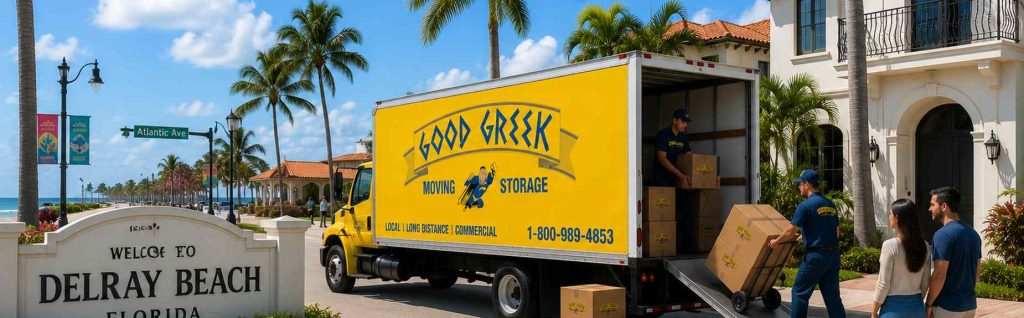
Relocating a company involves far more than choosing a city. There are offices to pack, equipment to transport, and employees who may be moving their households at the same time. Good Greek Moving & Storage is a family-owned, full-service company offering local and long-distance moving, storage, packing, and auto transport.
Because Good Greek uses its own trained crews rather than brokering jobs out to third parties, accountability stays in-house from planning through delivery. Whether a business is moving across town or employees are relocating to the Tampa area, that single-source reliability helps keep a complex transition organized and on schedule.
Relocating to Tampa, Florida: Frequently Asked Questions
Why are so many companies relocating to Tampa?
Companies are drawn to Tampa by Florida’s lack of a state personal income tax, competitive business costs, a growing talent pool, and a high quality of life. Together these factors make it easier to operate, recruit, and retain employees.
Is the cost of living in Tampa really lower than in major coastal cities?
Tampa generally offers a lower cost of living than major metros like New York, Boston, or San Francisco, especially when it comes to housing. This advantage helps companies attract employees relocating from more expensive regions.
What kind of moving help do businesses need when relocating to Tampa?
A corporate relocation often requires office packing, equipment transport, storage, and support for employees moving their households. Working with a full-service mover that uses its own crews helps keep these moving parts coordinated and accountable.