Why artificial turf cost varies so much
Artificial grass install cost is the sum of three line items: turf blend ($1–$4/sq ft), labor, and infill ($0.50–$1/sq ft). Skip the wrong layer and you’ll be re-installing the whole lawn in 5 years.
Like any home project, installing artificial turf in the yard of your new home requires a reality check on costs. Your first step is considering the different factors that may affect the overall cost of your project.
In the case of artificial turf installation, you’ll want to consider the cost of different turf blends, the many steps of installation, and the infill that is spread over the turf.
Artificial Grass Installation: Key Takeaways
- Total artificial grass install cost = turf blend ($1–$4/sq ft) + labor + infill ($0.50–$1/sq ft). A typical 500 sq ft Florida backyard runs roughly $750–$2,500 in materials alone before labor.
- Top-quality blends (nylon, polyethylene) last 10+ years. Cheap shiny “plastic” blends max out at 5 years. Pay more upfront to avoid replacing the whole lawn twice.
- Skip rubber infill in Florida humidity and Nevada heat extremes: it absorbs sun and gets uncomfortably hot under bare feet. Organic infill (cork, coconut husk) stays cooler and is better for the environment.
3 factors that affect artificial grass installation cost
Every line item on your turf quote falls into one of three categories: the turf itself, the labor to install it, or the infill that holds it down.
1. Turf blend cost and material quality
Artificial turf ranges from $1–$4 per square foot. Cheap blends last 5 years; nylon and polyethylene blends last 10+ years and look closer to real grass.
Artificial turf options are available at price points ranging from $1–$4 per square foot. As we know in the home improvement game, great quality isn’t cheap. Cheaper blends often have a shiny finish that looks like plastic and will be on the low end of usage, around 5 years.
The top-quality blends, made with nylon or polyethylene, will look and feel much closer to real grass. They have much better longevity than cheaper blends, lasting up to 10 years or more with proper care and maintenance.
2. Installation labor and yard preparation
The flatness and shape of your existing yard drive labor cost. Five prep steps must happen before turf is laid — this is the most expensive line item on most quotes.
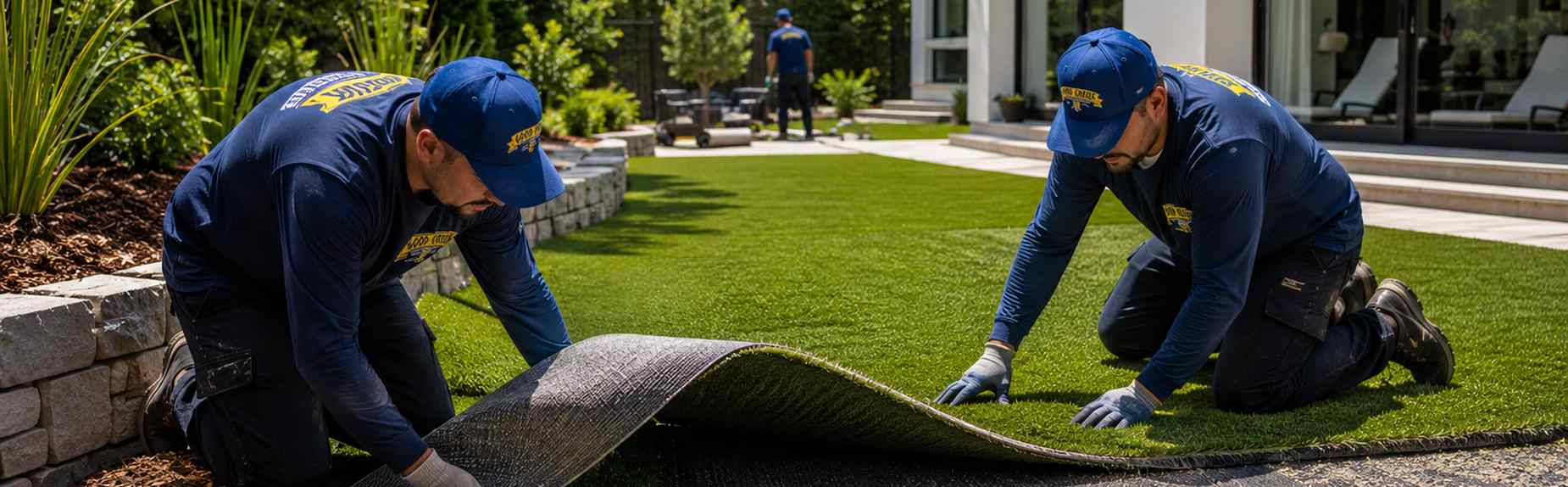
The regularity of your lawn in shape and level may impact the cost of artificial turf installation. There are several necessary steps to make sure your yard is completely flat and prepared for laying turf:
- Remove and dispose of your current lawn. There may be extra steps such as rock removal to get the soil nice and flat.
- Add a weed-control membrane so weeds don’t pop up through your turf.
- Add a smooth layer of sand.
- Cut and fit a layer of shock-absorbent material to fit your lawn.
- Cut and fit the artificial turf.
This is a lot of labor, which makes installation the most expensive part of this project. Professional installation is the most cost-effective option long-term — peace of mind knowing this tough task was done right.
3. Infill material (rubber vs organic)
Infill adds $0.50–$1 per square foot. Rubber is cheap but absorbs Florida and Nevada heat; organic infill (cork, coconut husk) costs more but stays cool.
Infill may seem like an afterthought, but with costs ranging from $0.50–$1.00 per square foot of turf, that’s a few extra hundred dollars to tack on to your project.
Just like the blend of turf you choose, the quality of your infill is important. Infill acts as the “soil” of artificial turf — weighing it down and holding up the individual blades for a natural look.
Cheaper rubber infill absorbs a lot of heat in summer, making it uncomfortable to walk on. Organic infill options (cork, coconut husk, walnut shell) are better for the environment, stay cooler, and feel more comfortable under bare feet.
Why artificial turf is worth it for new Florida and Nevada homes
In Florida humidity and Nevada heat, artificial turf eliminates watering, mowing, and fertilizing — typical maintenance savings pay back the install cost in 5–7 years.
Now that you have an idea of what turf installation costs include, you can set a budget that affords all of your needs. Even if it seems expensive upfront, the low maintenance costs pay it back over time — no watering bills, no mowing service, no fertilizer.
If you’re moving into a new home, Good Greek Moving & Storage has your back across Florida, Nevada, and serving nationwide. Need help budgeting the whole transition? Start with how much should my move cost, then request a free moving quote.
Artificial Grass Installation: Frequently asked questions
How much does artificial grass cost per square foot installed?
Total installed cost for artificial grass typically runs $8–$20 per square foot all-in (materials + labor + infill). Materials alone are $1.50–$5/sq ft (turf + infill). Labor adds the rest, varying by yard prep difficulty — a flat lawn with no rock removal is cheapest, sloped or rocky yards cost more.
Is artificial grass worth it in Florida humidity?
Yes, modern artificial turf is designed with perforated backing for drainage, so Florida rain and humidity won’t pool. The key choices for humid climates: pick a polyethylene blend (UV-resistant), use organic infill (stays cooler than rubber under the sun), and rinse periodically to remove mold-promoting debris.
How long does artificial grass last?
Cheap blends: 5 years. Top-tier nylon and polyethylene blends: 10–20 years with proper maintenance. Lifespan depends on foot traffic, infill quality, UV exposure, and whether the install included a solid base prep. Cutting corners on the base layer is the #1 reason turf fails early.
Can I install artificial turf myself or do I need a professional?
DIY is possible for small areas (under 200 sq ft), but for full backyard installs, professional installation is the cost-effective choice. Pros guarantee proper drainage, edge fixation, and seam alignment, common DIY failure points that lead to warping, drainage issues, and visible seams within 1–2 years.