

Should you start your own moving company?
Low capital, high competition: starting a moving company offers a fast path to business ownership, but most new entrants underestimate licensing, insurance, and brand-building costs.
Starting a moving company is a great way to become a business owner without a huge amount of capital investment. However, the business is highly competitive, leading many people to choose to run a moving franchise as part of an established company rather than start their own.
If running your own moving company sounds appealing, the following lists important factors to consider. They apply to anyone who is seriously considering what they will need to do to successfully launch. The final section looks at starting a moving franchise, an option that offers many advantages for business owners.
Starting a Moving Company: Key Takeaways
- Starting a moving company is low capital but high competition. A franchise model reduces risk by handing you brand, pricing, insurance, vehicles, and permits up front
- Specialization (junk removal, piano moves, auto transport, in-home moves) wins over generalist start-ups in saturated markets
- The five hardest barriers to entry are brand trust, pricing structure, insurance, vehicles, and tax setup. Each one is exactly what a franchise pre-solves for new owners
How to start a moving company: step-by-step
Eleven steps to launch a moving company, from picking a service niche to choosing a business structure and securing FMCSA registration.
Not all moving companies need the ability to handle an interstate move. When starting your own moving company, you might want to start small. Plenty of people need local moving services. In some cases, people just want help with in-home moves, transferring furniture from one room to another. Whether you decide to go big or go small, these general steps will help you create a framework for launching your moving company.
1. Choosing your moving service niche
Generalist mover or specialist (junk removal, piano moves, auto transport, art): the niche shapes equipment, pricing, and licensing.
Some movers are general movers that handle basic apartment and house moves. Others are specialized. For example, some movers focus on specific areas such as junk removal, in-home moves, small moves (two-bedroom apartments or smaller), auto transport (which requires a great deal of specialty equipment), or moving high-value items (such as pianos, art, expensive decorative pieces). This decision impacts everything that follows.
2. Writing a moving company business plan
A solid business plan covers costs, projected income, target markets, capital allocation, and growth opportunities.
The first step trips up many people. The desire to rush into buying equipment, hiring people, and getting started can overtake the more reasonable approach of writing a plan. A business plan sets down on paper the expected costs, projected income, the markets you plan to target, where to allocate money, and opportunities for growth. It is key not only to guide your actions but also to raise capital to start your business.
3.Getting business permits and licenses for moving
State-by-state regulations plus FMCSA registration for interstate commercial carriers.
Every state requires that a moving company pay for the permits and licenses that apply to the types of moves the business plans to do. Each state has different rules, so it is key to contact your state’s regulatory authority. The Federal Motor Carrier Safety Administration (FMCSA) also has information on registration needed to become a commercial carrier.
5.Pricing out moving equipment
A reliable moving truck, dollies, ratchet straps, moving blankets, stretch wrap, and packing supplies: the core kit for any new mover.
Once you have decided on the type of moving company you want to launch, you can start pricing out the equipment you will need. All movers need at least one truck that is reliable and large enough to handle the types of moves you plan to offer customers. The other equipment depends on the types of moves, including hand dolly, appliance dolly, ratchet straps, bungee cords, moving blankets, and stretch wrap to protect furniture. Open trucks will need a tarp and red flags. If offering packing services, you will need to price out those materials and supplies so you will know what to charge.
6.Purchasing insurance for a moving company
Liability, cargo, vehicle, and workers comp insurance — each one mandated or strongly recommended for a moving business.
Some states set a minimum requirement that movers must have for liability and cargo insurance. Movers also need to find reasonably priced insurance coverage for damages and liability. You will also need a solid insurance policy on all vehicles and workplace insurance to cover any potential injury to employees.
7.Hiring employees for your moving company
Start lean with 2–3 movers and scale into full-time, part-time, or seasonal crews based on demand.
The number of employees you need will correspond to how big the business gets. Many moving companies can start with just two or three people doing a few moves each week. Depending on the number of moves you do, you might need full-time, part-time, or seasonal employees.
8.Creating a moving contract and pricing structure
An attorney-drafted contract protects you and your client, while hourly pricing keeps you competitive with the local market.
To create an enforceable contract, it is important to consult with an attorney to help you draft one. The contract should protect both you and your client while setting out clear guidelines on issues such as payment and what is included in the move. On pricing, you should target a range that makes you competitive with the local market. Most movers charge hourly.
9.Advertising and marketing your moving company
Word of mouth, a professional website, social media, and local advertising drive early customer acquisition.
When you start your own moving company, you have to let people know it is available. Word-of-mouth remains a great way to drum up business. However, you may also want to start your own website, advertise on social media, and find traditional advertising outlets in local media.
10.Choosing a business structure (LLC, S Corp, C Corp)
Sole proprietorship, LLC, S Corp, or C Corp: each carries different tax and liability implications.
Every business needs to pick a name and a business structure. This impacts everything from regulations and required reports to how you pay taxes. Business structure options include sole proprietorship, Limited Liability Company (LLC), S Corp, and C Corp. Each has a variety of tax implications, so it is best to consult with an accountant. The IRS also mandates that businesses obtain an Employer Identification Number (EIN).
11.Moving franchise: the easier path to ownership
A moving company franchise pre-solves brand, pricing, insurance, vehicles, and tax structure — the five biggest barriers to entry for new owners.
For many of those getting into the business, owning a moving franchise from an established company is the best choice. A franchise means that most of the issues above are already handled, including business structure, types of services, pricing, vehicles, insurance, permits, licensing, and even hiring employees in some cases.
Obstacles a moving company franchise helps people overcome include:
- Building trust in your brand. A franchise gives you immediate brand recognition.
- Pricing structure and payment system. Already engineered for the local market.
- Buying insurance. Group coverage at lower rates.
- Finding the right vehicles. Pre-approved fleet contracts and financing.
- Setting up the proper tax structure for the business.
Starting your own moving company is a great way to get into a business with low overhead and high revenue potential. It also provides a service that is always in demand. For many, starting with a moving franchise and associating with a proven brand is the right way to go.
Start your moving company with Good Greek
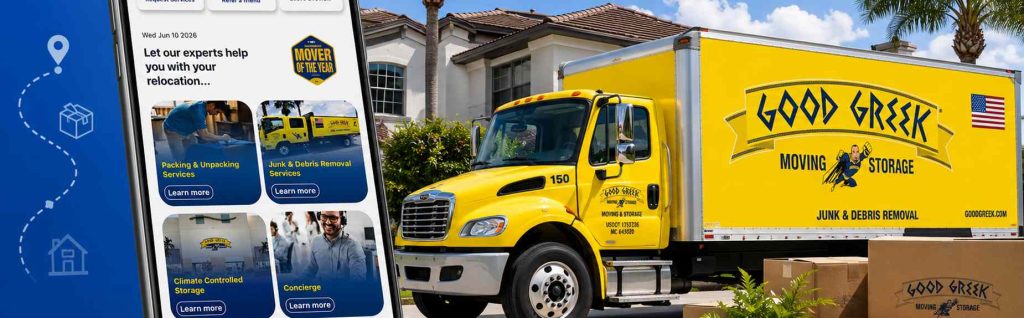
Are you interested in starting a moving company? Learn more about Good Greek Moving & Storage Franchise Opportunities. Good Greek operates across Florida, Nevada, and serving nationwide, and shares its 25+ years of operational expertise, brand power, and Total Relocation Solutions model with new franchise partners.
Starting a Moving Company: Frequently asked questions
How much does it cost to start a moving company?
Initial costs range from $10,000–$75,000+ depending on scope. A small in-home or local mover with one truck can launch for $10K–$25K (truck financing, basic equipment, insurance). A full-service interstate mover with multiple trucks and crews typically requires $50K–$150K+ in startup capital.
Do I need a license to start a moving company?
Yes. Every state requires business permits for moving companies, and interstate moves require FMCSA registration and a USDOT number. Each state sets its own rules for local intrastate moves, so check with your state regulatory authority before launching.
Is it better to start a moving company from scratch or join a franchise?
It depends on capital, risk tolerance, and brand-building appetite. Starting from scratch is cheaper short-term but takes years to build trust. A moving franchise carries higher initial fees but pre-solves brand, insurance, vehicles, and licensing, cutting time-to-revenue significantly.
What insurance does a moving company need?
Movers need liability insurance, cargo insurance, vehicle insurance, and workers compensation insurance. Cargo insurance protects client belongings, vehicle insurance covers the moving truck fleet, and workers comp protects against on-the-job injuries during lifting and transport.