

Why most renters lose apartment deposit money
Landlords legitimately deduct from apartment deposits for damage beyond “normal wear and tear,” cleaning, and unpaid rent. But many landlord deductions are illegitimate — and renters lose apartment deposit money because they didn’t document the rental properly.
A security deposit works as a form of insurance for the landlord against damage or unpaid rent — often equal to a full month’s rent, so hanging onto it is a priority. The most common reason renters lose that money: they didn’t photo-document the apartment’s move-in condition. Without move-in documentation, renters can’t dispute move-out damage claims when the landlord alleges damage that existed before the rental began. The second most common reason: renters skipped proper move-out cleaning. Most apartment leases require “broom clean” or “professional clean” condition — failing this standard triggers cleaning fee deductions from the apartment deposit.
State laws set apartment deposit return windows — Florida requires deposit return within 15-30 days. California: 21 days. Texas: 30 days. Most states require landlords to itemize any apartment deposit deductions. Wrongful deposit retention may entitle renters to 2x-3x damages in some states. Documentation is the renter’s primary protection. (Before you move out, our moving-out checklist for apartment renters walks through every step.)
Apartment Rental Deposit: Key Takeaways
- Common apartment deposit mistakes: no move-in photos, no move-out photos, skipping deep cleaning, not repairing minor damage, late notice, missing keys, carpet damage, utility neglect, being disruptive during showings, and skipping the walk-through.
- Photo documentation (move-in + move-out, date-stamped) is the renter’s strongest apartment deposit protection.
- State law sets apartment deposit return windows — Florida 15-30 days; itemized deductions required. Wrongful retention may entitle renters to 2x-3x damages.
- Apartment deposit recovery often requires hiring professional cleaners ($150-$400), DIY minor repairs (spackle + paint), and 30-60 day proper notice.
The most common apartment deposit mistakes
These apartment deposit mistakes account for most lost rental deposit money — each preventable with proper move-in documentation, deep cleaning, and notice timing.
Mistake 1 — No move-in condition photos
Without move-in photos, renters can’t dispute move-out damage claims by the landlord.
Most apartment deposit losses start at move-in. Renters take possession of the apartment, sign the lease, and never document the existing condition. When move-out happens, the landlord points to damage and claims the renter caused it. Without dated move-in photos, the renter has no evidence to dispute the landlord’s claim. Mistake 1 is the most expensive apartment deposit mistake — and the easiest to prevent: take date-stamped photos of every room, every wall, every appliance at move-in.
Mistake 2 — No move-out photos either
Without move-out photos, the landlord can claim damage you didn’t cause.
Move-out photos protect against landlord claims of damage after you’ve left. Take date-stamped photos of every room AFTER your cleaning and repairs but BEFORE handing over keys. The landlord can claim damage occurred during the unit’s vacancy or in transition — but move-out photos prove the apartment’s condition at handover. Most apartment deposit disputes resolve in the renter’s favor when both move-in and move-out photo documentation exist.
Mistake 3 — Skipping deep cleaning at move-out
Cleaning fees deducted from the apartment deposit can run $200-$500+ per unit.
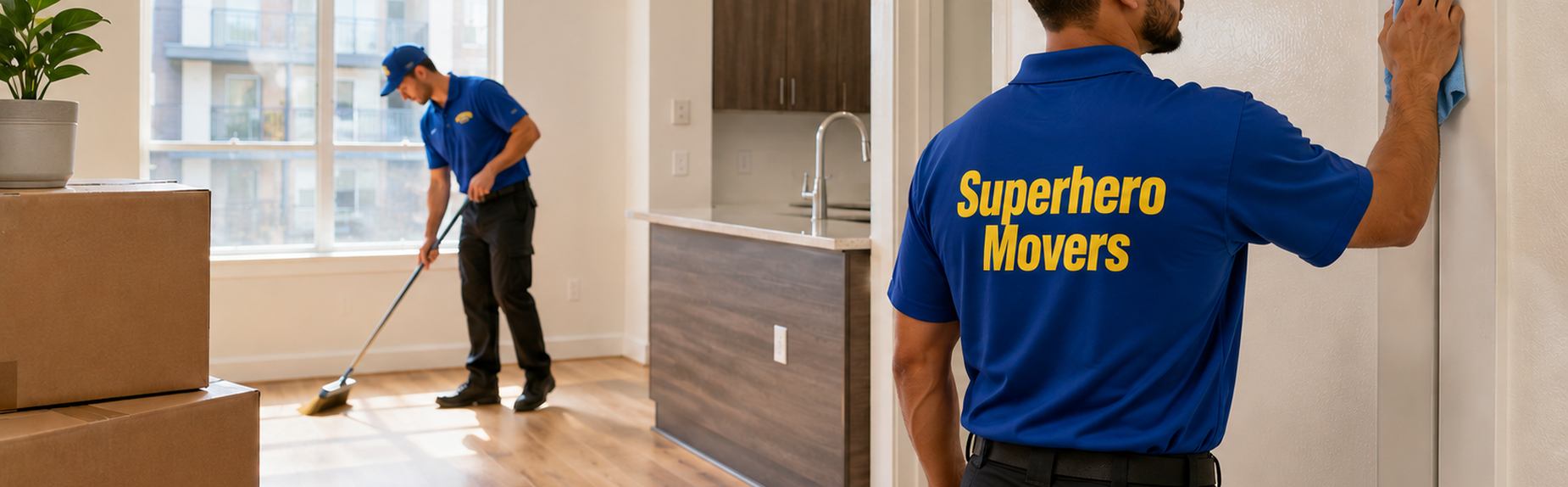
Most apartment leases require “broom clean” or “professional clean” condition at move-out. Renters who skip deep cleaning often face $200-$500+ deductions from the apartment deposit for landlord-arranged cleaning. Hire professional cleaners ($150-$400) or do thorough deep cleaning yourself: kitchen interiors (oven, refrigerator), bathrooms, baseboards, windows, floors. Read your specific lease to verify cleaning standards required.
Mistake 4 — Not repairing nail holes and minor damage
Landlords charge premium rates for minor damage repairs — $50-$100 per nail hole vs. $20 DIY repair cost.
Nail holes from picture hanging, minor wall scratches, and light scuffs are renter responsibility under most leases. Landlords charge premium rates for repairs — $50-$100 per nail hole vs. $20 of spackle and paint for DIY. Repair small damage yourself at move-out: spackle nail holes, touch-up paint where you have matching color (ask your landlord for the paint number), and address minor scratches. Save the apartment deposit money.
Mistake 5 — Late or improper move-out notice
Most apartment leases require 30-60 days written notice before move-out.
Late notice triggers lease violation penalties — typically forfeiture of part or all of the apartment deposit, plus an additional month’s rent in some cases. Notice periods are usually 60 days, though some run as short as 30 or as long as 90. Send notice via certified mail or email with read receipt, and save proof of timing for any future dispute. Read your specific lease for notice requirements.
Mistake 6 — Not returning all keys, fobs, and garage openers
Replacement key and fob fees deducted from the apartment deposit can total $50-$300.
Apartment deposit deductions for missing keys, fobs, garage openers, and mailbox keys are common. Track every key and access device from move-in. Return all of them at move-out — including spare keys you made. Replacement fees: $50-$150 per fob, $100-$300 for garage openers, $25-$50 per missing standard key. Save the apartment deposit money.
Mistake 7 — Carpet damage from pets, stains, or burns
Carpet damage is the largest single apartment deposit deduction — often $500-$2,000+.
Carpet damage — pet stains, deep stains, burns, dragged furniture damage — is the largest single apartment deposit deduction. Professional carpet cleaning ($100-$200) reduces minor damage. Repair burns and stains before move-out if possible. For pet renters, document pre-existing carpet condition extensively and use pet-friendly cleaning practices throughout the rental. Major carpet damage often exceeds the entire apartment deposit.
Mistake 8 — Forgetting to forward mail or terminate utilities
Utility bills charged to the landlord after move-out get deducted from the apartment deposit.
Final utility bills and mail forwarding affect your apartment deposit. If utility accounts aren’t transferred or terminated at move-out, bills sent to the apartment go to the landlord — and get deducted from the apartment deposit. File a USPS change-of-address before move-out. Schedule electric, gas, water, internet, and cable transfers or terminations for the day after move-out (in case the move runs late). Document final utility readings.
Mistake 9 — Being disruptive during showings
Working against your landlord during showings can cost you the deposit.
One great way to protect your rental deposit is to work with the landlord, not against them, when they show the apartment or townhouse to prospective tenants. Some renters become disruptive — leaving a mess or insisting on being present for every showing. Cooperating to shorten the time the unit sits vacant goes a long way toward getting your deposit back in full.
Mistake 10 — Not being present for the walk-through
Skipping the final walk-through lets the landlord blame you for issues you didn’t cause.
Without the tenant present, landlords may attribute any small issue they find to the renter — a loose baseboard, or a sink that never drained properly. Ask the landlord to do the walk-through with you there. If that’s impossible, ask them to fill out and sign a condition checklist after inspecting the unit. That gives you protection against being blamed for problems you didn’t create.
Apartment deposit state law — return windows and renter rights
State law sets apartment deposit return windows and landlord obligations. Wrongful retention may entitle renters to 2x-3x damages.
Florida apartment deposit return: 15-30 days depending on whether the landlord makes deductions. California: 21 days. Texas: 30 days. New York: 14 days. Most states require landlords to itemize apartment deposit deductions in writing — vague “cleaning” or “damage” deductions without itemization may be invalid. If the landlord wrongfully retains apartment deposit money, send a written demand letter citing state law. If unresolved, file in small claims court. (Deposit laws change and vary by state — verify your state’s current rules before acting. This is general information, not legal advice.)
Many states allow 2x-3x damages for wrongful apartment deposit retention. Document everything throughout the rental: move-in photos, walkthrough notes, payment receipts, communication with the landlord, repair requests, move-out photos, cleaning evidence, and key return receipts. Strong documentation usually resolves apartment deposit disputes in the renter’s favor.
Good Greek apartment movers: professional crews for apartment moves
Good Greek Moving & Storage handles apartment moves with professional crews — fast, careful, insured.
Good Greek’s apartment moving services include studio, 1-bedroom, 2-bedroom, and larger apartment moves. Professional crews handle furniture disassembly, careful navigation of narrow doorways and stairs, elevator coordination with apartment buildings, and Certificate of Insurance (COI) provision where required by building management. Hiring professional movers at move-out also prevents the damage that can eat into your deposit.
Good Greek’s apartment moving experience helps with apartment deposit recovery — careful handling reduces damage during the move that could affect deposit return. Stay on top of these issues as your move date draws closer, and use our apartment moving checklist to keep on track. Florida, Nevada, and serving nationwide. Call (561) 683-1313 or request a free apartment moving quote.
Apartment Deposit: Frequently asked questions
How long does my landlord have to return my apartment deposit?
Depends on state law. Florida: 15-30 days depending on whether deductions are made. California: 21 days. Texas: 30 days. New York: 14 days. Most states require landlords to itemize apartment deposit deductions in writing — vague deductions may be legally invalid. Verify your state’s current rules, as laws change.
What counts as “normal wear and tear” that landlords can’t deduct?
Normal wear and tear includes minor scuffs from furniture, light carpet wear, faded paint from sunlight, and small nail holes from typical picture hanging. Landlords cannot deduct from apartment deposits for these. Damage beyond normal use (large wall holes, deep stains, burns, broken fixtures, pet damage) is deductible.
Can my landlord keep my apartment deposit for cleaning?
Only if your lease requires specific cleaning standards and you didn’t meet them. Most apartment leases require “broom clean” or “professional clean.” Hiring cleaners ($150-$400) protects the apartment deposit. Photo-document the cleaned condition at move-out as evidence of compliance.
What if my landlord wrongfully keeps my apartment deposit?
Send a written demand letter citing state law and your move-in/move-out documentation. If there’s no resolution, file in small claims court. Many states allow 2x-3x damages for wrongful apartment deposit retention. Strong photo documentation usually resolves disputes in the renter’s favor.
Does Good Greek help with apartment moves?
Yes — Good Greek Moving & Storage handles apartment moves of all sizes (studio, 1-BR, 2-BR, larger). Professional crews, COI provision for apartment buildings, and careful handling to avoid move damage. Call (561) 683-1313 or request a free apartment moving quote.