
How to move your plants safely — what to know before moving day
Plants need special handling on a move: a little prep keeps them healthy, and transporting them in your own car protects them from the temperature swings inside a moving truck. Here’s the simple way to do it right.
Moving your plants is easier than most people think — it just takes a different approach than moving furniture. Most professional movers leave plants off the truck for good reasons that actually protect your plants: enclosed trucks swing from over 130°F in summer to near freezing in winter, the dark interior stresses plants over long trips, and several states inspect plants at the border to keep agricultural pests out. The good news? With a short prep timeline and a spot in your own car, your plants can make the move in great shape.
A few states — Florida, California, and Arizona especially — check plants at entry to protect major crops from pests like citrus greening and the Mediterranean fruit fly. That just means a little planning ahead, which we’ll walk through below.
Moving Plants: Key Takeaways
- Your plants travel best in your own car, where climate control keeps them comfortable — far safer than a moving truck.
- A simple timeline does the trick: 3 weeks out repot, prune, and treat for pests; 1 week out ease back on sunlight; day-of, pack in open boxes and load the car.
- Florida, California, and Arizona inspect plants at the border, so check your destination state’s rules before a long-distance move — usually a quick step.
- Good Greek handles everything else — furniture, packing, storage, and more — so plants are the only thing you carry yourself.
How to prepare plants for moving — a simple 3-week timeline
Start about 2-3 weeks ahead. Repotting, pruning, pest treatment, and packing each have their moment on the timeline.
3 weeks before moving — repot, prune, treat for pests
Three weeks out, move plants into plastic pots, trim them compact, and clear up any pests.
Three weeks before the move, repot your plants into plastic containers — they’re lighter to carry and far less likely to crack in transit than ceramic. Prune as you go: remove dead leaves, trim excess growth, and shape each plant so it packs easily. If you spot any pests, treat them now with insecticidal soap or neem oil so problems don’t travel to your new home.
1 week before moving — water normally, ease back on sunlight
A week out, keep watering on schedule and slowly reduce sunlight to prep for travel.
One week before, water your plants on their normal schedule — just don’t overdo it, since soaked soil is heavy and can lead to root rot in transit. Start easing each plant back from direct sunlight, moving it a little farther from the window each day. This gently prepares them for the darker travel period in the car.
The day before — water lightly and prep your boxes
The day before, give a light drink and get open-top boxes ready.
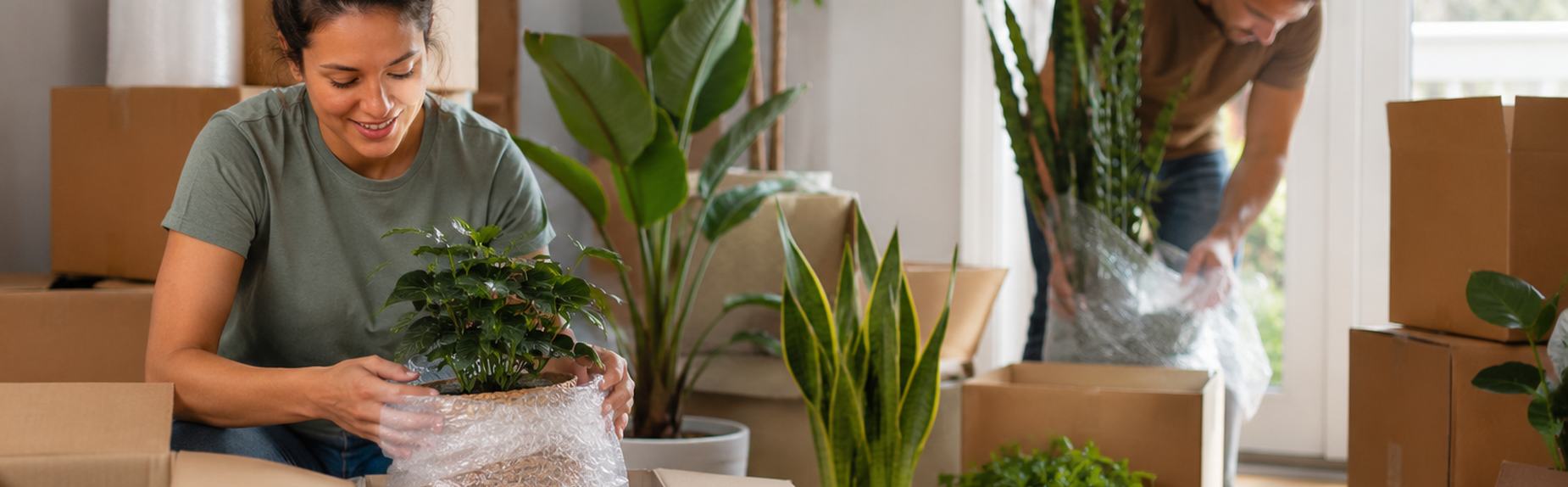
The day before the move, water lightly — just enough to keep plants hydrated without saturating the soil. Set up open-top cardboard boxes (don’t seal them), wrap any ceramic pots in bubble wrap, and gather what you’ll want at the other end: fertilizer, soil, spare pots, and plant food.
Moving day — pack plants in your car
On moving day, pack plants in open boxes, drape them lightly, and load them into your own car.
On moving day, place plants in open-top boxes and drape a sheet of paper or light cloth across the top to soften the sunlight, much like their normal indoor spot. Then load them into your own vehicle — your car’s climate control keeps them comfortable the whole way. Park in the shade during stops, and your plants will arrive ready to settle in.
State plant rules for long-distance moves
Florida, California, and Arizona check plants at the border to protect local crops. Most other states are more relaxed, but it’s worth a quick look.
Florida, California, and Arizona — check before you cross
These states inspect plants on the way in, so a little planning keeps things smooth.
Florida, California, and Arizona have the most thorough plant rules in the country. The Florida Department of Agriculture and Consumer Services (DACS) protects the state’s huge citrus industry, the California Department of Food and Agriculture (CDFA) safeguards its $50B in agriculture, and Arizona follows suit. Crossing into these states may involve a quick inspection or a permit for certain species — easy to handle when you check ahead.
Most other states — a quick check is all you need
Elsewhere, rules are lighter, but USDA federal guidelines still apply.
Outside those three states, most plant moves are straightforward, though USDA federal rules still apply nationwide. Common houseplants usually cross state lines just fine — just double-check before moving fruit trees, citrus, regulated species, or large quantities.
How to confirm the moving plant rules for your destination
A two-minute check covers you.
To confirm the rules for your new state: (1) visit the destination state’s Department of Agriculture website, (2) contact your local USDA office for federal guidance, (3) for Florida moves, check Florida DACS requirements specifically, and (4) consider a specialty plant-transport service for valuable, exotic, or regulated plants that need formal interstate shipping.
Good Greek handles everything else
Good Greek Moving & Storage takes care of your household goods, furniture, and belongings — so your plants are the one thing you bring along yourself.
Good Greek’s full-service moves cover household goods, furniture, electronics, appliances, art, antiques, and personal belongings. Like most professional movers, we leave plants off the truck simply because they travel better in your care — but everything else is handled for you.
So on moving day, ride along with your plants and let the crew take care of the rest — packing, loading, transport, unpacking, climate-controlled storage if you need it, junk removal, and auto transport for your vehicles. It all adds up to taking the stress out of moving day. As the 2024 ATA Mover of the Year — A+ BBB rated, with 30,000+ moves a year — Good Greek makes long-distance moves across Florida, Nevada, and nationwide simple. Call (561) 683-1313 or request a free moving quote.
Moving Plants: Frequently asked questions
Will my moving company transport plants?
Most movers leave plants off the truck — and it’s to protect them. Enclosed trucks hit over 130°F in summer, the darkness stresses plants on long trips, and some states inspect plants at the border. The best approach is to bring plants in your own car, where climate control keeps them comfortable.
How do I move plants long-distance to a new home?
Transport them in your own vehicle with the climate control on — it’s the safest, simplest method. For valuable or exotic plants, specialty plant-transport services are also available. Just avoid enclosed moving trucks for the long haul, and pack plants in open boxes in the back seat or trunk.
What state rules affect moving plants across borders?
Florida, California, and Arizona are the most thorough — they inspect plants at the border to protect major crops like Florida citrus and California’s $50B agriculture. Most other states are more relaxed, though USDA federal rules apply nationwide. Check your destination state’s Department of Agriculture before a long-distance move.
What if a plant struggles after the move?
It happens — relocation is a big change for plants. Bring cuttings, divisions, or seeds as a backup, and give plants time to bounce back once they settle in. Most recover beautifully after a little rest in their new spot, and sentimental favorites are worth the extra care of careful car transport.
Does Good Greek handle plant transport?
Plants are the one thing you’ll carry yourself — they simply travel best in your care. Good Greek handles everything else: household goods, furniture, electronics, and belongings, across Florida, Nevada, and nationwide.
Photo credit: Home Designing