
The last logistics question every long-distance mover faces
You’ve packed the boxes, scheduled the movers, and updated your address. One question often gets left until the last minute: how do you actually move all the family’s cars?
You’ve packed the boxes, removed the junk, notified everyone of your new address, and avoided all the common mistakes of moving. But there’s one last issue you may not have considered: how do you plan to move all of your family’s cars?
This question, unfortunately, comes up at the last minute for many movers. It’s especially complicated if the move is from one state to another — or worse, across the country. In some cases, there aren’t enough family members to drive all the cars. Or you simply don’t want to drive that far for that long.
Fortunately, auto transport services eliminate the headache. Enclosed carriers, professional crews, and GPS tracking turn one of the most stressful parts of a long-distance move into a scheduled appointment.
Auto Transport Services: Key Takeaways
- 5 reasons most long-distance movers ship instead of drive: driver safety concerns (seniors, college students), avoiding wear and tear (zero miles added), highway safety risks, convenience (no fuel/meals/hotel costs), and classic/luxury vehicle protection
- For classic cars, luxury vehicles, electric vehicles, and motorcycles, enclosed carriers are essential — open carriers expose vehicles to weather, road debris, and theft visibility. Good Greek uses closed-carriage trailers with cameras and GPS tracking
- Auto transport is part of Good Greek’s Total Relocation Solutions — bundled with moving, packing, storage, junk removal, and realty under one quote across Florida, Nevada, and serving nationwide
5 reasons to use auto transport during a move
Auto transport is a growing industry — and these five reasons cover why more people choose to ship their car instead of driving it on a long-distance move.
If you’re considering auto transport, you’re not alone. The global car carrier market continues growing year over year, driven by the same five core reasons:
1. Concerns about the driver (seniors, students)
Family members aren’t thrilled about elderly parents or college-age children covering thousands of miles solo. Auto transport eliminates the worry — and the risk.
This applies especially to seniors and college students. Loved ones are not thrilled by the prospect of either an elderly or a young driver covering thousands of miles during a move. Auto transport eliminates having to spend days and nights worrying about safety of elderly parents or college-age children.
2. Avoiding wear and tear on the vehicle
A cross-country drive adds 2,000-3,000+ miles to your odometer. That accelerates maintenance timelines and increases fender-bender risk. Auto transport adds zero miles.
A long-distance move can add thousands of hard road miles onto a vehicle. That speeds up the timetable for routine maintenance (oil changes, tire rotations, brake service) and increases the odds of costly accidents — even “fender benders” can cost thousands of dollars. With auto transport, the journey adds zero miles to the odometer.
3. Highway safety on long unfamiliar drives
Long-distance drives through unfamiliar cities, rural areas without rest stops, and isolated stretches increase accident and crime risk. Auto transport eliminates the drive entirely.
Making a long-distance drive across the country involves going through big cities, rural areas with nowhere to stop, and long stretches of unfamiliar territory. This can increase accident risk. It can also expose drivers to criminals who prey on travelers in isolated areas — particularly at rural gas stations and rest stops at night.
4. Convenience and total trip cost
Driving means fuel + meals + hotels + lost time. When you add it up, auto transport is often cost-comparable to driving — without the days on the road.
There’s enough stress in planning and executing a smooth move (it helps to hire full-service movers who offer every service you need). The time and costs of a long road trip add to that stress:
- Fuel costs — 2,000 miles at 30 mpg + $3.50/gal ≈ $235
- Meals — 3-4 days on the road, $50-$75/day per person
- Hotels — 2-3 nights at $120-$200/night
- Lost time — 3-5 days of driving = 3-5 days of PTO or productivity
- Wear and tear costs — maintenance + depreciation from added miles
Auto transport often comes in cost-comparable or slightly above driving — but without the days on the road, the stress, or the added miles.
5. Protecting a classic, luxury, or specialty vehicle
Classic cars, luxury vehicles, electric vehicles, and motorcycles need enclosed carriers — no road debris, no weather exposure, no risk of visible theft.
Most people with classic cars, luxury cars, electric vehicles, or motorcycles choose to transport rather than drive — eliminating the danger of damage. That danger is only eliminated if you choose enclosed auto transport carriers. Open carriers (the kind used to ship new cars to dealerships) expose vehicles to weather, road debris, and theft visibility — fine for ordinary cars, not OK for high-value vehicles.
How Good Greek’s auto transport works
Enclosed carriers, cameras, GPS tracking, and bundled with Total Relocation Solutions. Whether you’re shipping a daughter’s first car or a classic Corvette — same crew, same care.
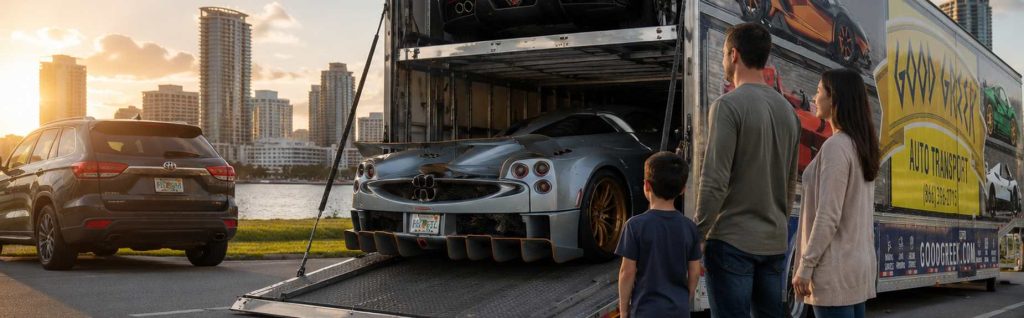
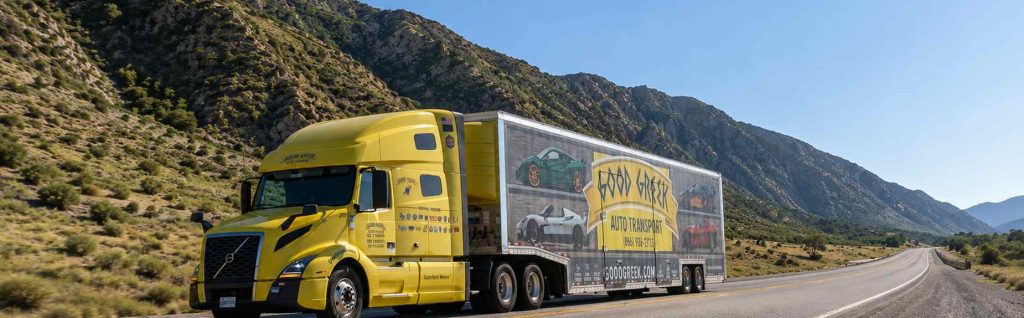
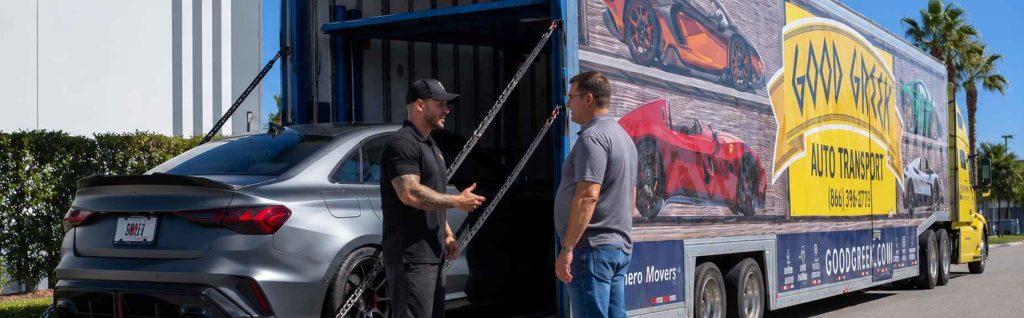
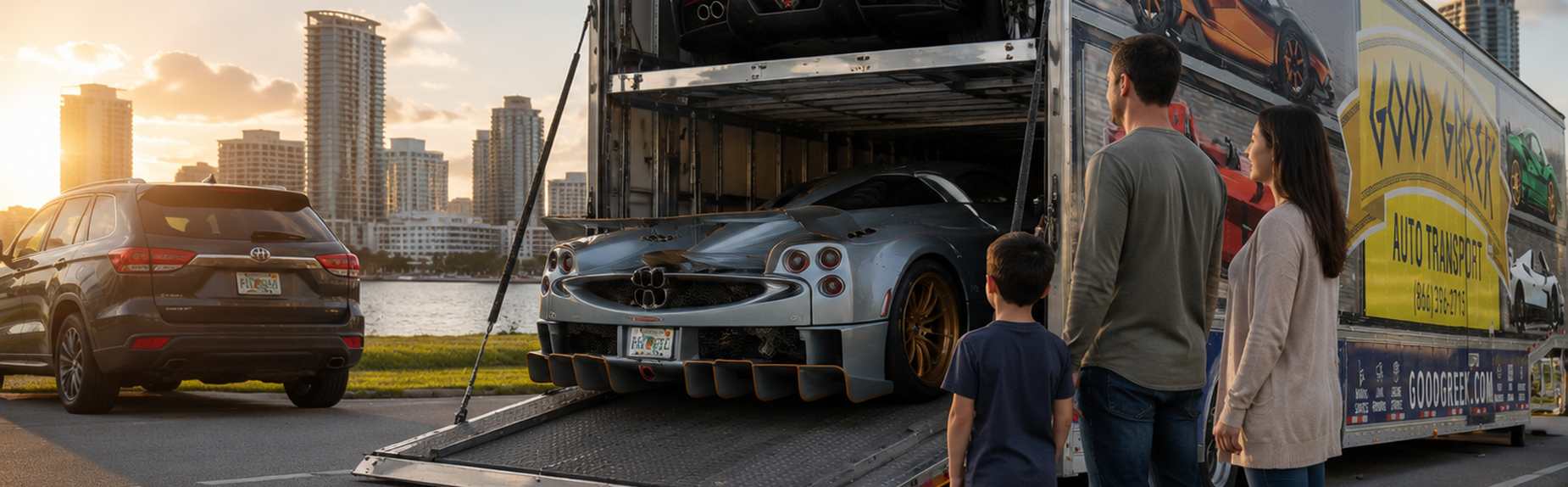
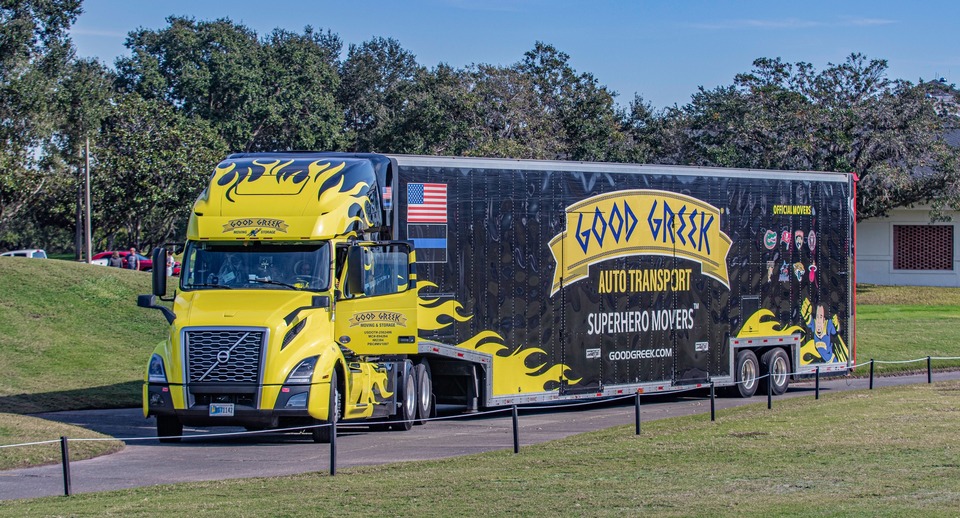
Good Greek Moving & Storage offers enclosed carriers as part of Total Relocation Solutions — which include moving, packing, junk removal, realty, storage, and auto transport under one quote. Auto transport vehicles use the latest technology to protect cars in transit.
“Good Greek auto transport boasts the most state-of-the-art, closed-carriage trailers equipped with cameras and GPS tracking, so you always know where your car is located. Good Greek’s auto transport offers a great option whether you’re moving a luxury vehicle or your daughter’s first car.” Spero Georgedakis, The Good Greek, Founder & CEO
When driving the car yourself makes sense while moving?
Auto transport isn’t always the answer. For short moves, low-value vehicles, or trips where the family wants to drive together as part of the relocation experience, driving still works.
- Short-distance moves — under 300 miles. Auto transport setup time and cost don’t pay off
- You’re driving as part of the move — solo drivers heading the same direction as their belongings can just take the car
- Single-driver families with one car — sometimes auto transport doesn’t make practical sense logistically
- Family road trips by design — some people want the relocation drive as a family memory
Plan your auto transport with Good Greek
For long-distance moves — or when shipping a classic or luxury vehicle anywhere — auto transport eliminates the dangers, wear and tear, and stress of a long drive.
For long-distance moves and classic/luxury vehicle relocations, auto transport services eliminate the dangers, wear and tear, and stress of a long drive. Good Greek’s auto transport is bundled with the rest of Total Relocation Solutions — Florida, Nevada, and serving nationwide. Call (561) 683-1313 or request a free moving quote to discuss your move.
Auto Transport: Frequently asked questions
How much does auto transport cost on a long-distance move?
Typical ranges: $700-$1,500 per vehicle for open carriers (standard cars, 1,000-3,000 miles), $1,200-$2,500 per vehicle for enclosed carriers (classics, luxury, EVs, motorcycles). Final price depends on distance, vehicle size, urgency, and whether shipping coast-to-coast.
Open carrier or enclosed carrier — which should I choose?
Open carrier — standard cars, daily drivers, normal vehicles where weather and road debris exposure is OK. Used to ship most new cars to dealerships. Enclosed carrier — classic cars, luxury vehicles, electric vehicles, motorcycles, or anything where the vehicle’s resale value would suffer from exterior damage. Costs 40-60% more but worth it for high-value vehicles.
How long does auto transport take?
Depends on distance and route. Rough guidelines: East Coast to West Coast: 7-10 days, Midwest to either coast: 5-7 days, Florida to Northeast: 3-5 days. Enclosed carriers can run slightly slower due to specialty routing. GPS tracking lets you monitor in real time.
Can I pack belongings in the car during transport?
Generally no — most auto transport carriers prohibit personal belongings in the vehicle due to FMCSA regulations and insurance restrictions. Some carriers allow up to 100 lbs of personal items in the trunk, but verify before booking. Items in the trunk are typically not covered by the transport insurance.