
Packing is the part of moving that quietly decides how stressful the rest of your move will be. Show up with the right packing supplies for any move and the process feels almost mechanical: box it, label it, stack it, done. Show up short on materials and you end up improvising at midnight, hoping nothing breaks.
Whether you are relocating across town or across the country, having the correct moving supplies on hand protects your belongings and saves hours. Below are the eleven essentials worth gathering before you tape a single box shut.
Packing Supplies: Key Takeaways
- Buy more boxes than you think you need, in a few different sizes, so heavy and light items can be packed correctly.
- Protective materials like bubble wrap, packing paper, and furniture pads prevent the most common moving-day damage.
- Good labeling supplies turn an unloading scramble into a fast, room-by-room process.
Moving Boxes in Multiple Sizes
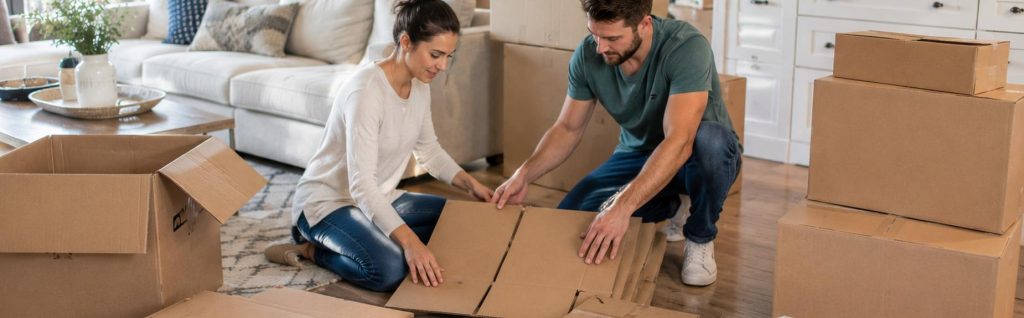
The single most important packing supply is the moving box, and the common mistake is buying only one size. Small boxes are for dense, heavy items like books and tools. Medium boxes handle the bulk of household goods. Large boxes are for light, bulky things like pillows and linens.
Stick to this rule and your boxes stay liftable. Buy roughly 25 to 30 percent more boxes than your first estimate, because nearly everyone underestimates how much they own.
Specialty boxes are worth it too. Wardrobe boxes let you transfer hanging clothes easily, and dish-pack boxes have thicker walls for kitchen fragiles.
Packing Tape and a Quality Dispenser
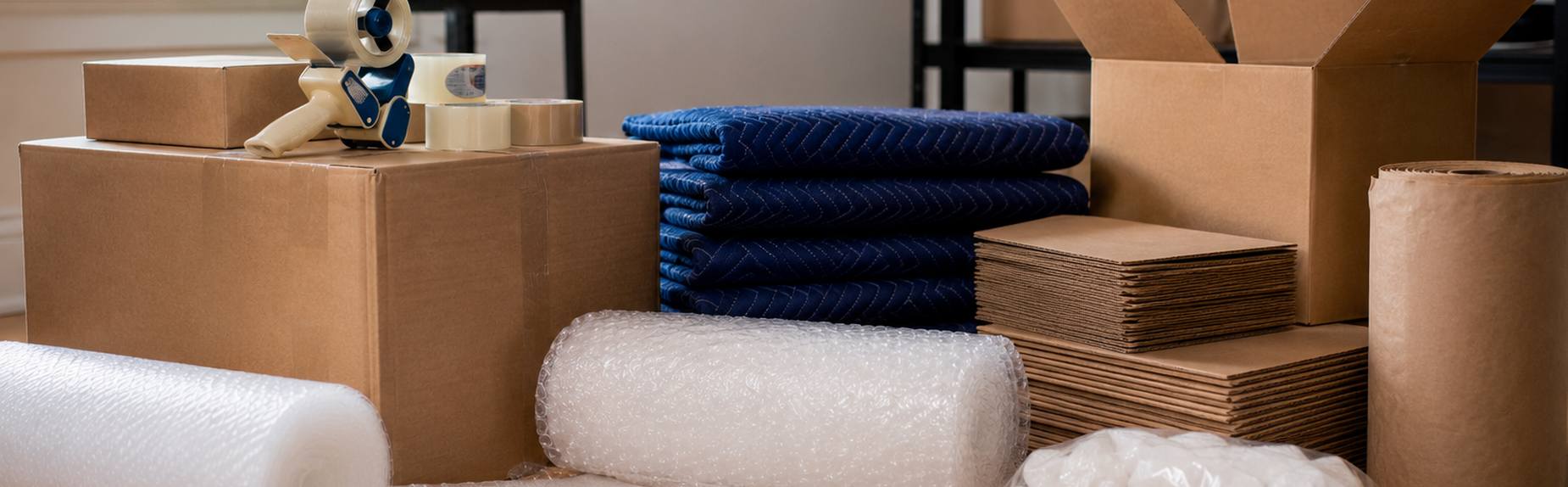
Cheap tape is one of the most frustrating things on moving day. Invest in real packing tape rated for shipping, and buy several rolls — about one roll for every 10 to 15 boxes.
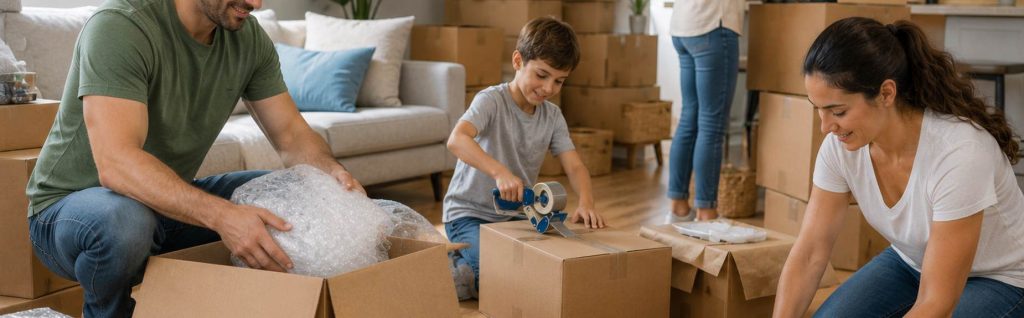
A handheld tape dispenser lets you seal a box in a single pass. Reinforcing the bottom of every box with an extra strip of tape prevents blowouts during the move.
Bubble Wrap and Packing Paper for Fragile Items
Protective wrapping is non-negotiable for anything breakable. Bubble wrap is ideal for glassware and electronics, while clean packing paper is perfect for wrapping dishes and filling gaps.
Skip newspaper as your primary wrap — the ink transfers onto dishes. Packing paper is inexpensive and keeps everything clean.
The goal with any fragile item is no movement inside the box. If a packed box rattles, it needs more cushioning.
Furniture Pads and Stretch Wrap
Your furniture needs its own gear. Furniture pads, or moving blankets, wrap around dressers, tables, and appliances to guard against scratches and dings.
Stretch wrap pairs perfectly with pads, holding blankets in place without residue and keeping drawers from swinging open. A roll of stretch wrap and a stack of pads can be the difference between furniture arriving flawless or scuffed.
Markers, Labels, and Color-Coding Supplies
Packing well is only half the job. Stock up on thick permanent markers and a roll of labels or colored tape so you can mark every box clearly.
Label each box with its destination room and a short list of contents, then assign each room a color. A quick swipe of colored tape means movers can place cartons in the right room without asking.
Mark fragile boxes on multiple sides, not just the top.
The Overlooked Extras: Mattress Bags, Box Cutters, and More
A few smaller supplies round out a complete moving kit. Mattress bags keep your bed clean and dry. Plastic bins are useful for items you want to access quickly.
Do not forget a sturdy box cutter, resealable bags for hardware, and a basic toolkit kept separate and accessible. Tape a labeled bag of screws to the furniture it came from.
Finally, keep an “essentials box” of first-night items and load it last so it comes off the truck first.
Let Good Greek Handle the Supplies and the Heavy Lifting
Gathering the right materials takes time and money. Good Greek Moving & Storage provides professional packing services and quality materials, so you can skip the supply run entirely if you choose.
Because Good Greek uses its own trained crews rather than brokering the job, the same team that wraps your furniture is accountable for getting everything to your new home safely.
Packing Supplies: Frequently Asked Questions
How many moving boxes do I actually need?
It depends on home size, but most people underestimate. A studio or one-bedroom often needs 15 to 30 boxes, while a larger home can require well over a hundred. Add roughly 25 percent to your initial guess.
Is bubble wrap or packing paper better for dishes?
Both work, and many people use them together. Packing paper is excellent for wrapping individual plates and filling space, while bubble wrap adds cushioning for especially fragile pieces.
Can I just use grocery bags and old newspaper to save money?
It tends to backfire. Grocery bags do not protect or stack well, and newspaper ink transfers onto belongings. Proper boxes and clean packing paper protect items far better.