
Why junk removal matters before any move
Moving companies price by weight (long-distance) or by volume and hours (local) — so every box of junk you bring along is money spent moving things you don’t need.
A large share of what fills the average home never gets used again after a move: outdated electronics, broken furniture, expired pantry goods, clothes that no longer fit, and items kept “just in case” but never touched. Decluttering before the move — and handling junk removal smartly — can meaningfully cut your moving cost, and it saves you the chore of unpacking things you’d only donate later anyway.
The best window to start is 4–8 weeks before moving day. Begin with rarely-used spaces (attic, storage, garage, basement) and work toward daily-use rooms (bedroom, kitchen). That order keeps the job manageable and stops everything from piling up in the final week.
Junk Removal Tips: Key Takeaways
- Movers charge by weight or volume, so clearing junk first directly lowers your moving cost.
- The 30-day rule: if you haven’t used it in 30 days, donate it, sell it, or have it hauled away.
- Free donation pickups are widely available — Goodwill, Habitat for Humanity ReStores, Vietnam Veterans of America, and the Salvation Army.
- Movers can’t take hazardous materials, propane tanks, paint, ammunition, perishables, or plants — plan those separately.
Strategic Decluttering and Junk Removal: Sort, Sell, Donate, Dispose
Effective decluttering works in four phases: sort everything into piles, sell what’s valuable, donate for free pickup, and haul away the unusable rest.
1. Sort belongings into 4 piles: no maybe pile
Start by sorting into four piles: keep, donate, sell, trash. No “maybe” pile allowed.
The “maybe” pile is the enemy of progress. If you can’t decide, it’s a donate. Spend about five seconds per item — your gut call is usually right. This forced-choice approach speeds things up dramatically. Start with low-emotion categories (kitchen gadgets, garage items) before working toward harder ones (clothes, books, sentimental items).
2. Sell what’s valuable: Facebook Marketplace, OfferUp, estate sales
Sell the items worth selling — Facebook Marketplace, OfferUp, Nextdoor, eBay, or estate sales.
Books, basic clothes, and everyday kitchen items are rarely worth the time to sell — donate those instead. Furniture, electronics, appliances, collectibles, jewelry, and specialty items can do well on Facebook Marketplace, OfferUp, Nextdoor, eBay, or through a local estate-sale company. Set a two-week deadline: anything unsold becomes a donate. Don’t let “I’ll sell it” become a reason to stall.
3. Donate for free pickup: Goodwill, Habitat ReStores, VVA
Several charities offer free home pickup: Goodwill, Habitat for Humanity ReStores, Vietnam Veterans of America, and the Salvation Army.
Free donation pickup saves time and supports your community. Goodwill, Habitat for Humanity ReStores, Vietnam Veterans of America (VVA), and the Salvation Army all schedule pickups in most areas. Book them 2–3 weeks before your move. Donations are tax-deductible, so get a receipt for your records. Furniture, appliances, clothes, books, kitchen items, and household goods are typically accepted.
4. Have the unusable rest hauled away
For what can’t be sold or donated, professional junk removal handles the rest.
Old mattresses, broken furniture, water-damaged items, expired chemicals, and dead electronics all need professional removal. National and local junk removal services are available in most metros, and a local hauler is often the most affordable option — typically $200–$700 per truckload depending on volume. Either way, hauling junk away costs far less than paying to move it to your new home. The simplest route is to bundle removal with your move (more on that below).
What movers won’t take items that need separate disposal
Professional movers can’t transport certain items. These need junk removal, hazardous-waste disposal, or a spot in your own car.
Federal regulations and mover policies restrict what crews can carry. Off-limits items include hazardous materials (gasoline, propane tanks, paint, solvents, fertilizers, ammunition), perishable food (frozen or refrigerated), plants, pets, and high-value sentimental items.
Hazardous materials go to a local Household Hazardous Waste (HHW) drop-off — most counties operate one. Perishable food should be eaten, donated to a food bank, or tossed before move day. Plants travel best in your own vehicle (most movers leave them off the truck). And high-value sentimental items — jewelry, key documents, family heirlooms — should ride in your car, not on the truck.
Good Greek: Junk Removal built into your move
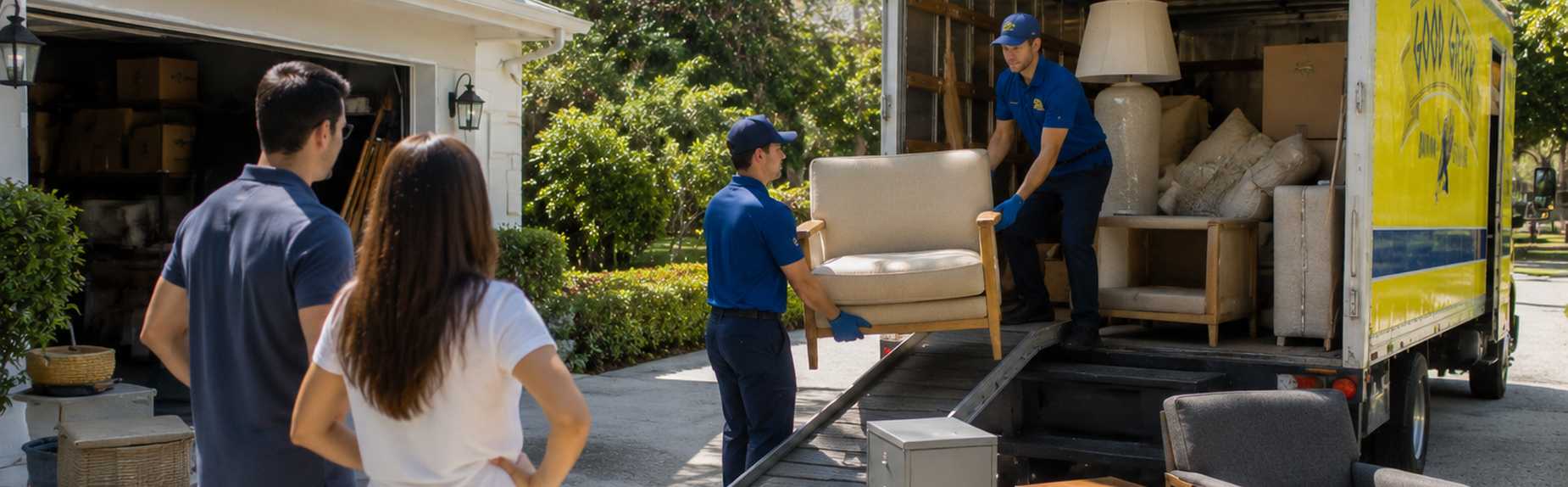
Good Greek Moving & Storage includes junk removal as part of a full-service move: one company, one point of accountability for moving, packing, storage, and hauling.
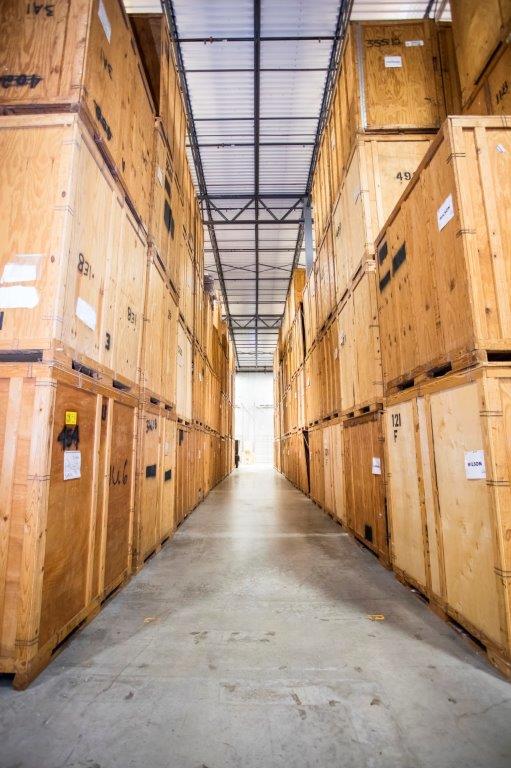
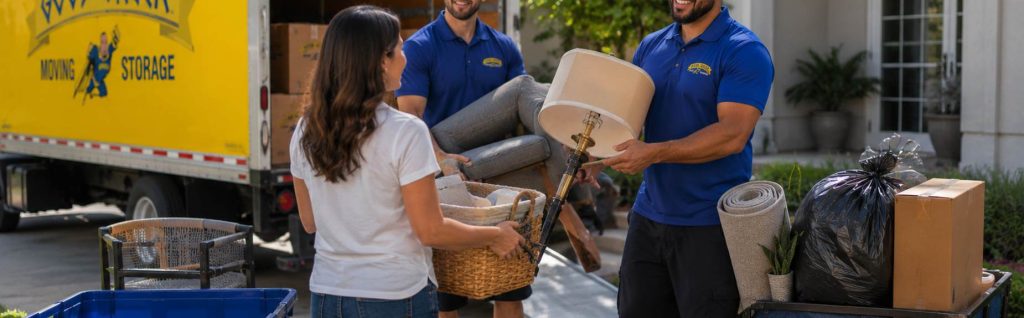
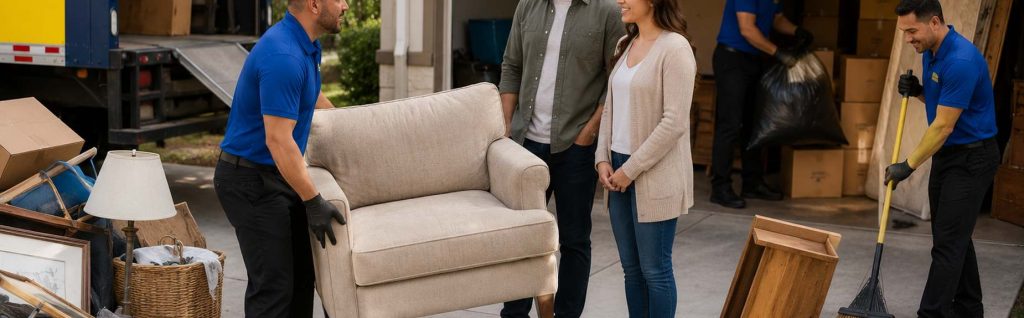
Instead of lining up a separate hauler before moving day, Good Greek handles both — the same crew that packs and loads also clears the items you’ve sorted into the “dispose” pile. Climate-controlled storage is available too, if you need temporary space during downsizing or a transition.
Bundling removal at quote time means single-point accountability and no scramble to coordinate multiple providers — which is the easiest way to keep your move stress-free and your moving costs down. Florida, Nevada, and serving nationwide. Call (561) 683-1313 or request a free moving quote that includes junk removal.
Junk Removal: Frequently asked questions
When should I start junk removal before a move?
About 4–8 weeks out. The earlier you sort and dispose, the more time donation pickups, sales, and haulers have to clear everything without a last-week scramble. Junk removal services book up at month-end and during peak moving season.
How much does junk removal cost?
A professional haul typically runs $200–$700 per truckload depending on volume. Donation pickups (Goodwill, Habitat ReStores, VVA, Salvation Army) are free. Selling fees depend on the platform and your pricing. All in, full-home decluttering usually lands somewhere around $300–$1,000 — far less than moving the same items.
Will my mover take my junk?
No — movers transport household goods, not junk, and can’t take hazardous materials, perishables, plants, or anything you’ve marked for disposal. Plan removal separately, or bundle it into a full-service move with Good Greek.
Does Good Greek offer junk removal?
Yes — Good Greek includes junk removal as part of full-service moving, with the same crew that packs and loads clearing your designated items. Ask for a quote with bundled junk removal pricing.
How do I dispose of hazardous materials I can’t move?
Local Household Hazardous Waste (HHW) drop-off sites accept paint, solvents, propane tanks, ammunition, and similar items. Most counties operate one — check your county solid-waste authority’s website. Never put hazardous materials in regular trash or pour them down a drain.