
Why people are moving to Tampa, Florida?
About 150 people move to Tampa every day, drawn by the Tampa Bay region’s mix of business growth, sunshine, and distinct neighborhood character.
Founded in the 19th century as a trading outpost, Tampa, Florida later became a tourist destination for Americans seeking to escape harsh northern winters. Today, Tampa is a major business center for Florida and the Southeast and one of the most popular places in the country to move to. Great neighborhoods in the city include Downtown Tampa, Davis Islands, Carrollwood, Ybor City, Westchase, and South Tampa.
Tampa sits at the heart of the Tampa Bay area, a region that contains about 4 million people and stretches from Pasco and Hernando counties to the north, Plant City to the east, Sarasota to the south, and St. Petersburg and Clearwater to the west.
Within Tampa city limits, the estimated population reached about 393,000 in 2018. That number keeps climbing, with about 150 people moving to Tampa every day. But where will they live? The following looks at some of the best neighborhoods in Tampa.
Living in Tampa: Key Takeaways
- Tampa offers seven distinct neighborhood types: downtown high-rise, historic islands, planned suburb, restored old neighborhood, and entertainment district. The right fit depends on lifestyle (urban vs family-suburban vs historic vs nightlife)
- South Tampa (Hyde Park, Palma Ceia, Beach Park) holds the most coveted real estate, while Westchase and Carrollwood lead the rankings for young families thanks to strong schools and low crime
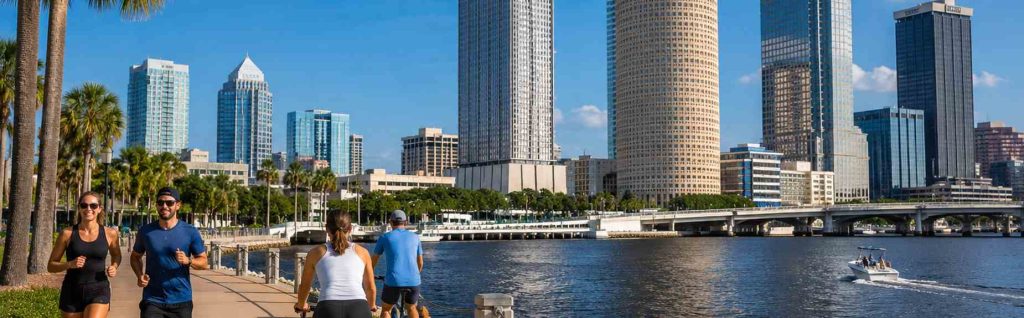
- Downtown Tampa transformed in the last decade with Water Street development, Channel District housing, and the 2.6-mile Tampa Riverwalk, shifting from a 9-to-5 ghost town to a top live-and-work destination
Best places to live in Tampa: neighborhood-by-neighborhood guide
From Downtown’s Tampa Riverwalk to the planned green streets of Westchase, every part of the city offers a different version of Tampa life.
Living in Downtown Tampa
Best for urban professionals: Water Street development, Channel District housing, and the 2.6-mile Tampa Riverwalk.
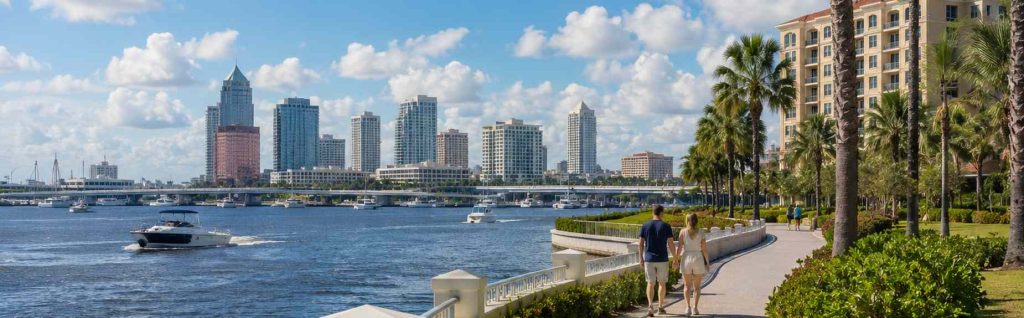
Once a ghost town after 5 p.m. and on weekends, Downtown Tampa is now bustling with new development and plenty of places to live. The Water Street development provides both residential housing and commercial space, while the Channel District just to the east of downtown has many townhouses and apartments. Downtown Tampa also features the 2.6-mile Tampa Riverwalk with restaurants, museums and parks, as well as water taxis to ferry you wherever you need to go.
Living in South Tampa: historic homes and waterfront
Best for established residents: Hyde Park, Palma Ceia, Beach Park, and historic neighborhoods with restored older homes.
The term South Tampa encompasses a variety of different neighborhoods, all to the southwest of downtown on a peninsula with Hillsborough Bay on one side and Old Tampa Bay on the other. All feature older, well-maintained homes in some of the first neighborhoods in Tampa. The most popular neighborhoods include Hyde Park, Palma Ceia, and Beach Park, although you also can find older, restored homes in areas such as Ballast Point, Sunset Park, Virginia Park, and the Interbay Area.
Move to Davis Islands: waterfront Tampa living
Best for waterfront living: large homes, apartments, and access to Peter O. Knight Airport.
Immediately south of downtown, Davis Islands are accessed by crossing a bridge where the Hillsborough River flows into Hillsborough Bay. The islands contain a mix of large homes, apartments, and smaller homes close to Peter O. Knight Airport on the southern tip of the islands. It’s where baseball Hall of Famer Derek Jeter owns a home, currently rented by future football Hall of Famer Tom Brady.
Move to Carrollwood: Tampa’s family-friendly suburb
Best for young families: quiet streets, well-maintained houses, great schools, and only 10 miles north of downtown.
One of the first suburban communities in Tampa, the Carrollwood neighborhood now straddles Dale Mabry Highway north of downtown. The neighborhood is known for quiet streets, well-maintained houses, lawns, great schools, and safety. Although technically a suburb, it sits only about 10 miles north of downtown Tampa.
Living in Ybor City: history, nightlife, and culture
Best for nightlife and history: cigar industry heritage, historic district, entertainment, and a thriving business community.
Founded by Vincente Martinez Ybor in 1885, Ybor City is a small city within a city that served as home to the famous cigar industry in the area for decades. Today it contains a historic area, entertainment district, and thriving business community. While housing is scarce, several apartment complexes and rental homes have become popular, and development continues to move east, offering more housing opportunities.
Living in Seminole Heights and Tampa Heights
Best for restored old-Tampa charm: two-decade renaissance with renovated homes, restaurants, bars, and indie retail.
These two older neighborhoods north of downtown Tampa have undergone a renaissance over the past two decades, with renovated homes and restaurants, bars, and other retail businesses moving into the area. The neighborhoods cover a large area that runs generally on the eastern side of the Hillsborough River. While some pockets are not fully developed, much of this part of the city has become some of the most attractive real estate in Tampa.
Move to Westchase: planned suburban living
Best for planned suburban living: landscaped roads, single-family homes, great schools, and low crime for young families.
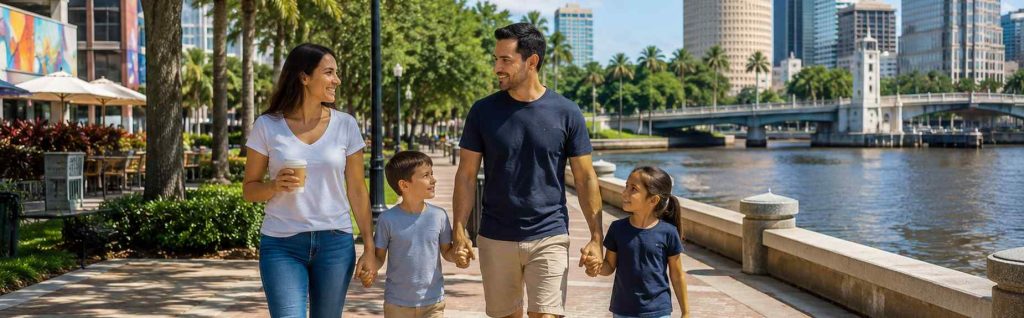
If a planned, green, and beautiful suburban community is what you had in mind, then Westchase is what you seek. This large neighborhood features beautifully landscaped roads, a large number of single-family homes, and some apartments available near the center commercial area that contains a wide variety of restaurants and retail outlets. Great schools and low crime make this especially attractive for young families.
These are some of the neighborhoods that make Tampa such an attractive city to new residents. They also get to enjoy all the reasons vacationers continue to come to Tampa every year, but all in their own backyard and available 365 days a year.
Tampa moving services from Good Greek
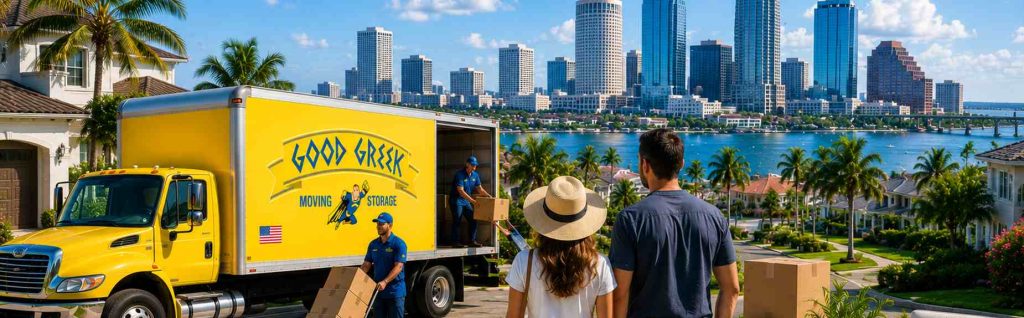
If you are planning a move to Tampa, Tampa Bay movers from Good Greek Moving & Storage handle local, long-distance, packing, storage, and auto transport, every service under one trusted brand. Good Greek operates across Florida, Nevada, and serving nationwide, with local Tampa crews and dedicated Move Lead coordinators.
Live & Move to Tampa: Frequently asked questions
What is the best neighborhood to live in Tampa?
It depends on lifestyle. South Tampa (Hyde Park, Palma Ceia, Beach Park) holds the most coveted real estate, Westchase and Carrollwood top the list for young families, and Downtown Tampa leads for urban professionals after the Water Street and Tampa Riverwalk developments.
Is South Tampa a good place to live for families?
Yes. South Tampa combines historic architecture, walkable streets, top schools (Plant High School, Roosevelt Elementary), and proximity to Tampa General Hospital. Hyde Park Village is the cultural anchor, and waterfront properties along Bayshore Boulevard remain among Florida’s most desirable.
What are the most popular neighborhoods in Tampa for young professionals?
Downtown Tampa (Water Street, Channel District) and Ybor City lead for young professionals thanks to walkable amenities, the Tampa Riverwalk, and a growing tech and finance scene. Seminole Heights is the rising indie alternative, with renovated bungalows and a strong food and bar scene.
How much does it cost to move to Tampa?
A local Tampa move typically runs $500–$2,500 depending on home size and services. Long-distance moves into Tampa from out of state run $3,000–$10,000+. Request a free moving quote for a transparent flat-rate estimate.